

If your time is short:
-
What separates a strong advisory board from a flat one isn’t just the tooling it runs on, but the strategy that goes into it: the prep survey, the live moderation, the follow-up, and the intention behind how the whole thing is built.
-
A short survey sent about two weeks out does two jobs. It gets advisors thinking about your topics ahead of time and gives your moderators a baseline, so they can skip the obvious questions and go deeper from minute one.
-
In a long ad board session, fatigue is the enemy. Moving between presentation and discussion, controlling what's on screen and quietly feeding moderators real-time cues keeps people present, even when sessions stretch on. Additionally, consider keeping the synchronous meetings shorter, then extending the discussion with asynchronous discussion boards.
-
Quiet advisors shouldn’t be assumed to be disengaged. They may just participate differently. Chat, polls and an asynchronous discussion give them other ways in.
-
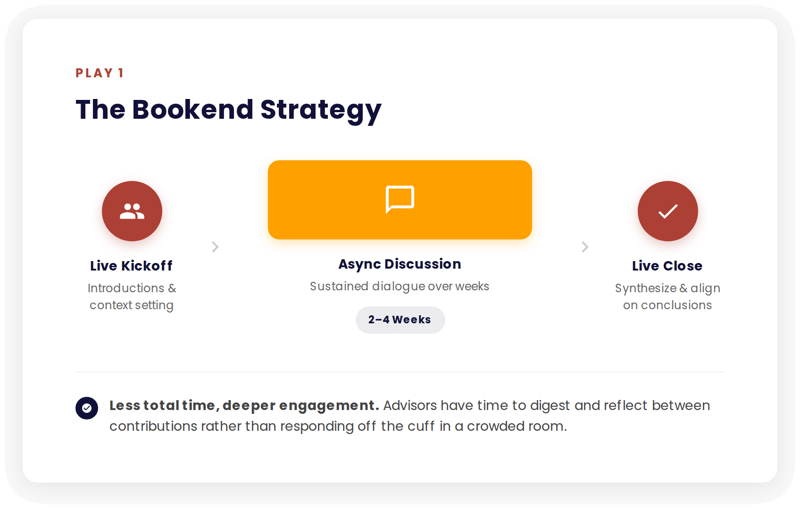
The bookend model (a live kickoff, a few weeks of asynchronous discussion, a live closeout) gets you more thinking per advisor than a single meeting ever will. It also gives you a chance to shorten your synchronous meetings by saving some questions for the discussion board.
-
Before you contact a single advisor, get clear on what you actually want out of the board. Define your goal as a specific statement. That one decision shapes everything downstream.
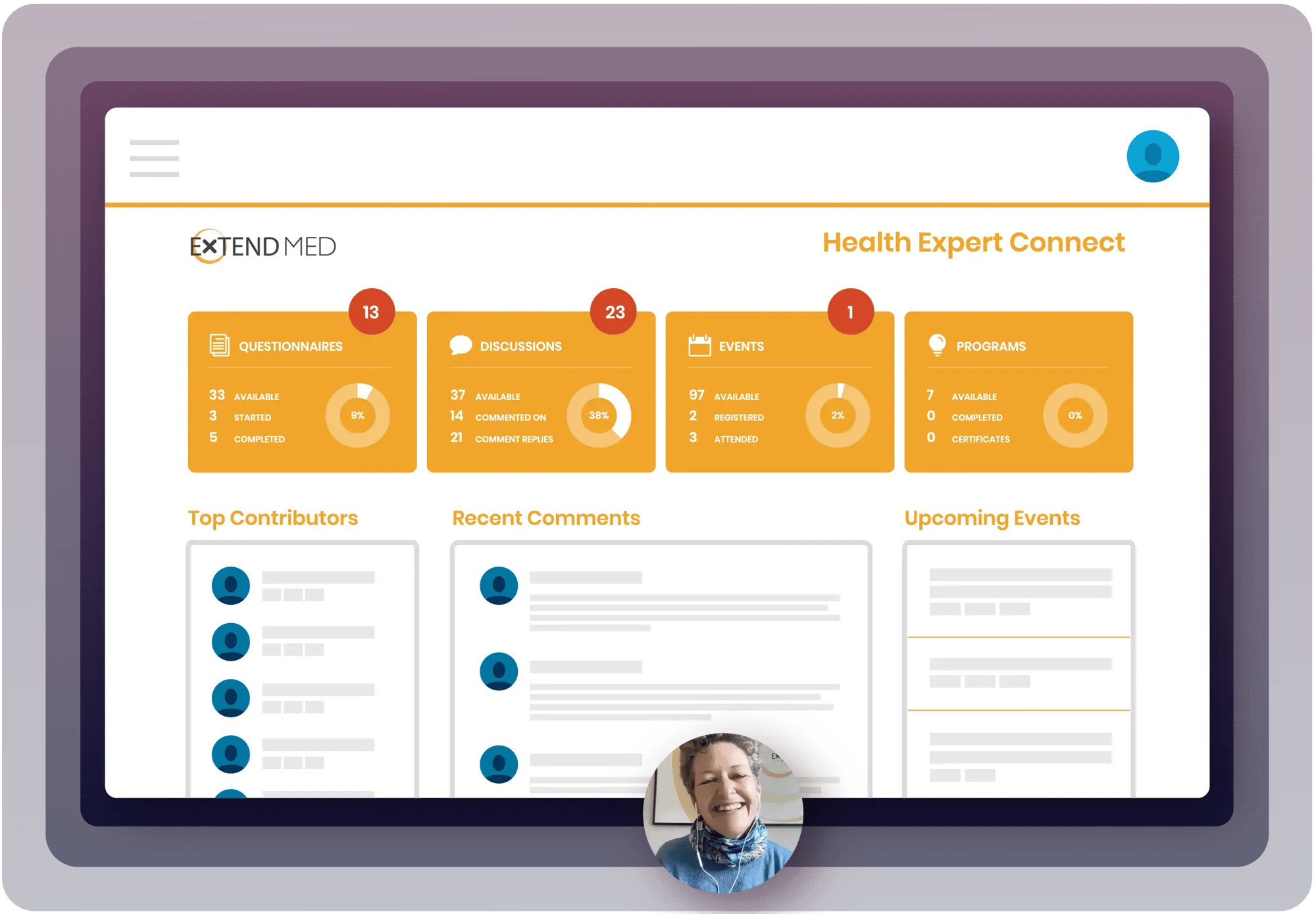
ExtendMed's Health Expert Connect™ gives you the power to simplify, scale and succeed with expert engagement programs across synchronous and asynchronous formats. Learn more.
The more virtual advisory boards we run, the more we’ve learned that technology is only one part of the equation. Running a great board takes knowledge and strategy that only comes from having done it before, no matter how powerful the underlying system is.
Pharma teams come to us with smart questions and the right experts lined up. What they’re often missing is a plan for getting real answers from those experts within the time they have. That gap is where most of our work lives, and what this guide explores.
I’ve drawn the lessons here from a couple of recent ad boards we’ve run for our clients: a disease-state program with a panel of dietitians, and a “bookend” engagement (two live virtual meetings with an asynchronous discussion component in the middle) for a small biotech building out its clinical strategy.
Here’s a quick look at how we complement our advisory board platform with the consultative aspect of organizing, stage-managing, and analyzing the engagements themselves.
Strategy starts about two weeks before anyone logs on
Before live ad board meetings, we send every participant a short survey. It’s simple but does a couple of important things that help everything go smoother downstream.
First, it puts advisors in the right headspace. They see the topics we'll cover, so by the time they show up, they've already chewed on them. Our client teams get considered answers instead of cold first reactions.
Second, it arms the moderators. We learn the basics and get that all squared away ahead of time so time can be better spent on more important topics. For example:
- How many patients with this condition does each advisor see?
- How are they treating them now?
The people running the meeting don't burn the first 30 minutes on warm-up questions that everyone already knows the answer to. They walk in with a baseline and spend the live time going deeper.
For one of our recent boards, that prep mattered a ton! We were working with dietitians, not prescribers, on a drug taken with meals that carries a manageable side effect. The questions we needed to ask were specific. The survey meant we weren't explaining the basics on the clock.
We also reach out to advisors ahead of a session via text message to review the logistics, expectations, and technical aspects of the live meeting so everyone’s prepped. That includes simple things like reminding advisors of the start time and that they’ll be on camera. Small reminders like this are surprisingly critical, especially with larger groups or people new to advisory roles.
Health Expert Connect™ surfaces baseline data before the live meeting
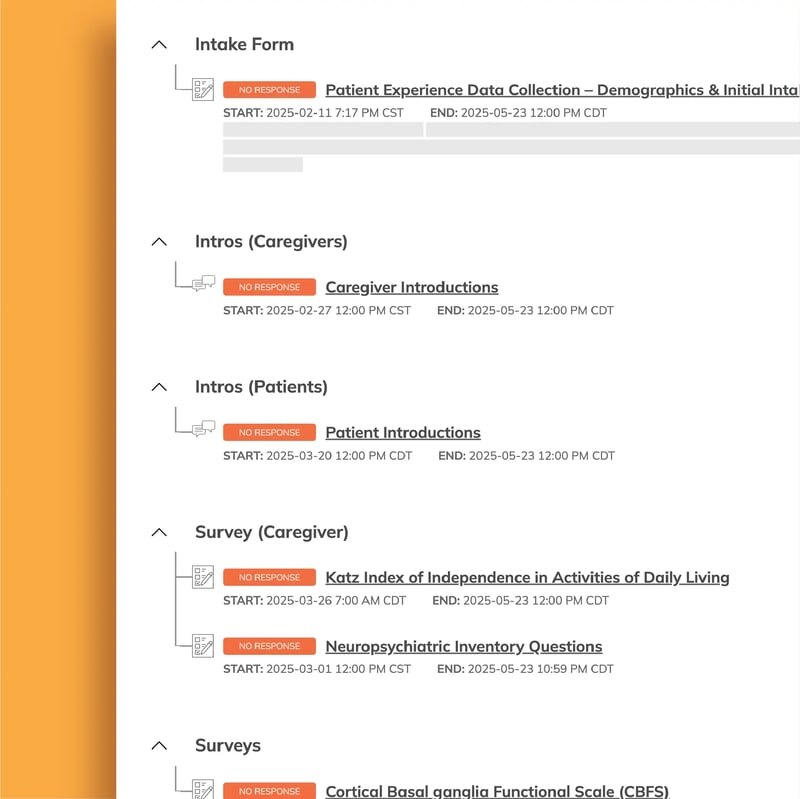
Our engagement platform, Health Expert Connect™, lets you build and send pre-read surveys, then see who completed them and what they said before anyone joins the call. Your moderators walk in already knowing the room.
Stage management: the part you're not supposed to notice
A three-hour virtual live session will lose people if you let it run flat. So we actively moderate to keep discussions engaging and dynamic.
The biggest lever we pull as ad board “stage managers” is rhythm. You don't present for two hours and then open it up for discussion. It’s too cognitively taxing for most people. They’re exhausted by the time they’re asked to engage. Instead, you move back and forth. A stretch of content, then a discussion, then back again. The format change is what keeps attention from sliding.
We're also managing the screen the whole time, and most participants never notice that we're doing it. When someone is presenting, we want their slides and their face, and we don't want the room distracted by everyone else's video. We mute the people who aren't speaking. When the meeting turns to discussion, we pull the slides down and bring the faces up, because a real conversation needs people looking at each other.
Underneath those simple but important stage-manager tasks, there's a running set of calls we’re making in real time:
- Who hasn't spoken yet? We flag it to a moderator on the side so they can bring that person in.
- Are we behind? We signal to tighten a question or move on. Is someone having a technical problem? One of us is already messaging them.
- Are we drifting off-topic or indulging too many tangents? We’ll tactfully prompt the discussion back to hit the core goal.
That's what I mean by stage management here. The objective is for our client to feel like the meeting just worked without the stress of worrying about the technical aspects of bringing people together to generate insights across them. It just happens.
"Our job is to be the band director and the stage crew for the discussion. We handle every hurdle of getting people on and keeping the production smooth, so you can focus on the content and the conversation you actually came to have. Clients tell us we made it easy. That's the point!”
— Amy Ravi, CEO, ExtendMed

Motivating your quieter advisors to contribute
Some of our first-time advisory board clients are surprised when they realize that the advisor who barely speaks on camera is often the one with the most to say. They just don't show it the way the more talkative advisors do.
So we give them more than one way in:
- The asynchronous discussion format is critical. Some people are far more comfortable away from a live camera, where they can look something up, sit with a question and write a real response. This is the single biggest tool for camera-shy advisors who have a lot to say, but would rather say it in a discussion board.
- Chat works the same way for people who'd rather type than interrupt. The chat function in our live meetings gives quieter advisors a way to share similar to a discussion board, but during the live session. And we release polls before, during or after a meeting to get fast read-outs. They’re great for answering questions like: What percent of advisors agree with a statement? How many patients fit a profile?
- Polls and chat also give the moderator a way to draw people out. Someone drops a comment in chat referencing a new research paper, and the moderator can say, "I saw what you posted. Tell me more about that." A poll can show the room split four ways, and now you can turn to a specific advisor and ask why they landed where they did.
One common pattern I see here is that quieter advisors tend to use the raise-hand reaction and wait their turn. The outspoken ones just jump in. Once you see that, you can run the room so that both sides are heard. Paying attention to the seemingly small interpersonal nuances like this and working them into active moderation can have a huge effect on the quality of the insights you get when it means the difference between someone sharing or choosing to stay quiet.
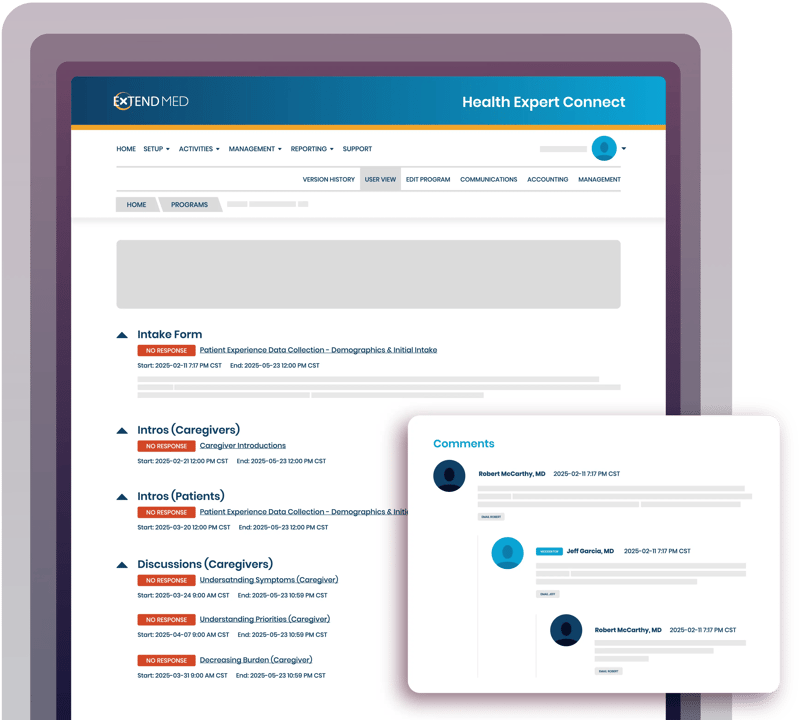
Health Expert Connect™ gives every advisor a way to contribute that fits them
Health Expert Connect™ runs live video, threaded discussion boards, chat and polls in one place, so the more quiet experts participate on their terms and the louder ones don't crowd them out. Moderators see it all and can prompt in real time.
The bookend model, and why it gets you more
For the recent biotech engagement, we ran what we call a bookend. It has three parts: a live kickoff, a few weeks of asynchronous discussion in the middle, and a live closeout.
I’ll break it down quickly:
- The kickoff jump-starts everything. You get in front of the advisors, lay out the background and let them ask questions live. (They're not just handed a packet as is often the case.) They can press the people who built the material: "I don't follow slide three, walk me through it." On Friday's board you could watch the advisors start bouncing ideas off each other, and that energy carried straight into the asynchronous phase.
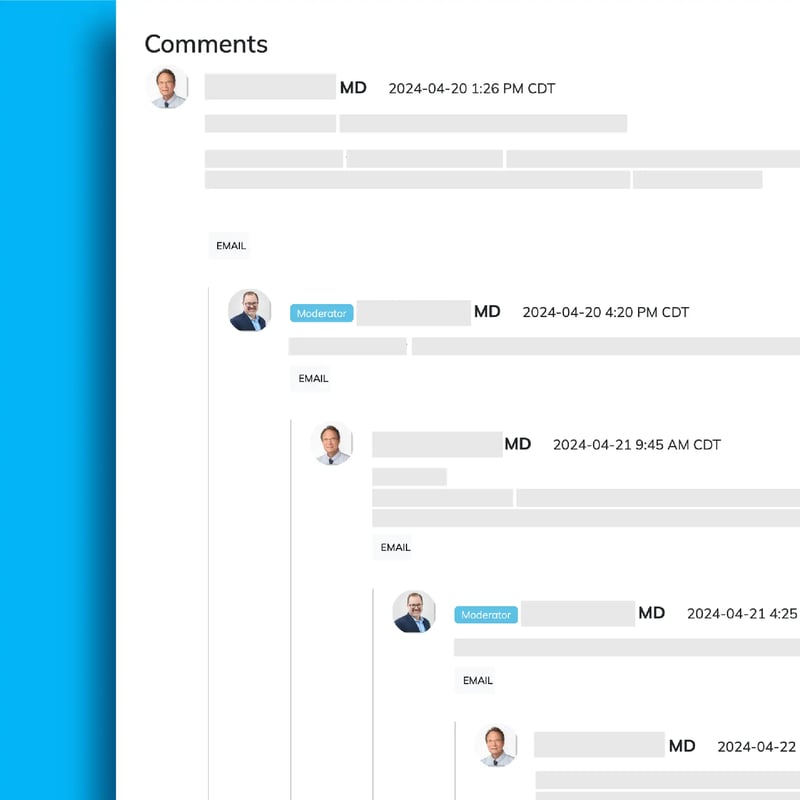
- That middle asynchronous discussion board phase is where the depth comes from. It’s not a static questionnaire. Rather, one advisor posts, another responds, and a thread forms. We have moderators in there nudging things along: "I like that point, can you build on it?" Because people have time to research and think, the responses you get are more substantial than anything you'd capture in a single live hour.
- Then the closeout ties it off. After a couple weeks of back-and-forth, we bring everyone back together, show the findings and thank them for their time. For a small biotech, that closeout can steer the next clinical study. For a company with a product already approved, it might shape patient education materials, like making them clearer or available in more languages.
“When an advisor gives you a few hours of their thinking, they need to know it landed. The closeout is where you show them what you heard and what you're going to do with it. Sometimes we even share an early draft so they can see their feedback already at work. That's what brings them back next time."
— Amy Ravi, CEO, ExtendMed
Health Expert Connect™ lets you run multi-phase programs from one place.
Health Expert Connect™ lets you group advisors into the right communities and move them through a kickoff, an asynchronous discussion and a closeout without stitching together separate tools.
What happens after the meeting ends
So much of the value shows up after the meeting, once the raw output can be analyzed and distilled into actual insights. Ad board analysis should reflect a joint effort between what we observed in the room and what the data tells us.
Here’s a look at our post-event workflow:
- We start with a detailed transcript, captured through a service that keeps up with the medical terminology that trips up generic tools.
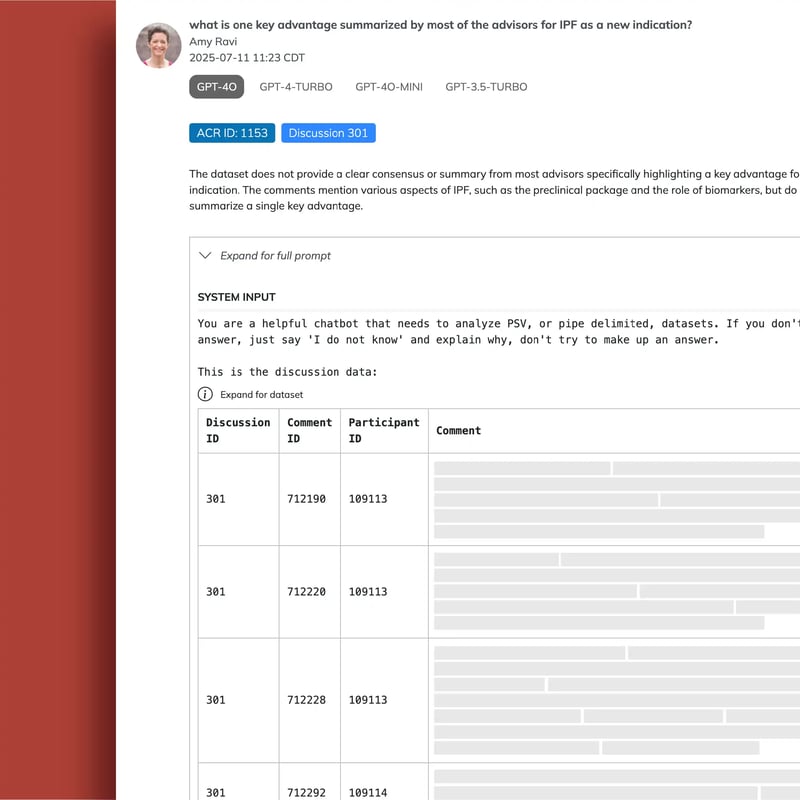
- Then we run an AI pass over that transcript, with personal information redacted, to produce a key-finding summary. That summary is a starting point, not the final word! We sit down with someone who was actually in the meeting and check it: does this match what we saw and felt? What did the AI miss? What needs a human correction?
- We make those edits, then deliver it in whatever format the client wants. Usually that's a short PowerPoint, three to ten slides. What we saw, the kinds of responses we tend to see and the takeaways we'd recommend.
Health Expert Connect™ lets you group advisors into the right communities and move them through a kickoff, an asynchronous discussion and a closeout without stitching together separate tools.
A few action items for pharma teams
If you want your first board to go well, here are a few points I stress to consider ahead of time:
- Get clear on your goals before you contact anyone. This is the one that matters most. When you know exactly what you want out of the board, we can bring the right play, whether that's a bookend, a round of polls or an ongoing discussion. When the goal is fuzzy, everything downstream gets harder. Start here and define exactly what you want in tangible terms.
- Pull together your advisor information early. Collect the basic information for your advisors: phone numbers, emails, time zones, etc. The sooner we have accurate contact details and basic background on each advisor, the better the strategy we can build around them.
- Decide whether this is one meeting or the start of a program. If you might want to re-engage these advisors later, plan for it at the start. It often changes how we structure the contract and the communities so you're not rebuilding from scratch in three months.
- Plan for the follow-up, not just the meeting. The board isn't done when the call ends. Know who on your side will review the summary and how you'll get the takeaways in front of the people making decisions.
See how we ran the bookend model for Mediar Therapeutics
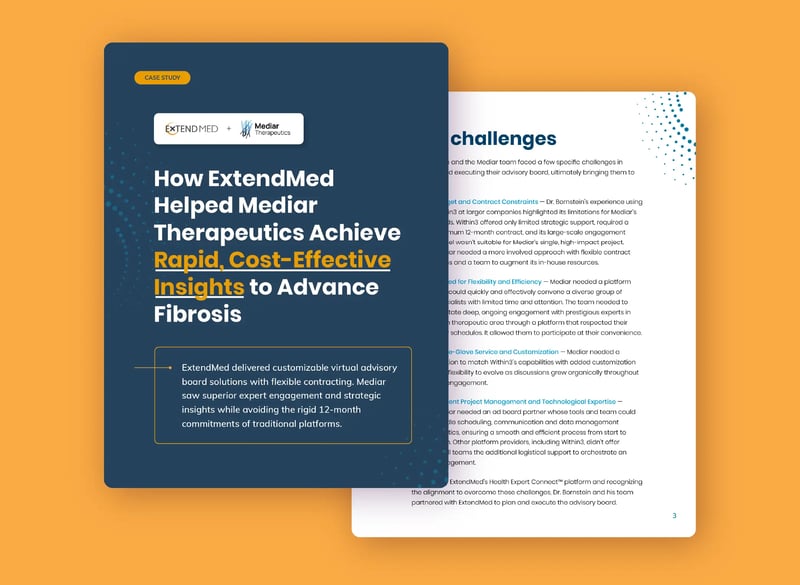
Mediar Therapeutics needed cross-functional insights into fibrosis fast, without the rigid 12-month contract that bigger platforms require. We ran a bookend advisory board with synchronous and asynchronous phases, built the features they needed in under a week and saw an average of more than five hours of participation per expert.
Read the Mediar Therapeutics case study »
Want to run your next ad board like this?
We partner with life science companies to plan and run advisory boards that actually get the answers you need. You bring the questions and the experts. We bring the platform, the production and the experience of having done this hundreds of times.
Schedule a demo » or learn more about our advisory board solutions »