
If your time is short:
-
Jifflenow is a general-purpose B2B meeting scheduler used across industries, while ExtendMed’s Health Expert Connect™ is purpose-built for pharmaceutical and life sciences organizations.
-
As far as engagement capabilities, Jifflenow focuses just on meeting scheduling. ExtendMed supports congress scheduling, advisory boards, asynchronous engagement and shared advisor records in one platform.
-
For compliance and KOL management, ExtendMed includes native Sunshine Act/Open Payments compliance and detailed KOL profiles. Jifflenow emphasizes attendee tracking, Salesforce integration and revenue attribution. Cvent sells HCP spend tracking separately.
-
ExtendMed offers flexible, program-based terms, with projects starting around $20,000-25,000 and no enterprise minimum. Jifflenow does not publish pricing and is sold as a Cvent add-on.
I've spent over two decades building technology for how pharma and its partners engage health experts. In that time, I've watched congress engagement go from a clipboard and a hotel suite to something teams try to run on enterprise scheduling software borrowed from the tech industry.
The scheduling part usually works. Everything around it tends not to.
If you're evaluating Jifflenow, or you already use it and something feels like it's missing, this guide lays out in plain terms how ExtendMed and our Health Expert Connect™ platform offers a more focused alternative.
Let me start by being fair to Cvent. Its Jifflenow system does what it was designed to do, and it does it well in that specific use case: Self-service booking, conflict prevention, Outlook and Salesforce integration, on-site check-in. If your problem is getting sales meetings booked efficiently at a trade show, it's a reasonable tool and I'd say so to anyone who asked.
The issue is that most life sciences teams evaluating it don't have that problem.
For a tech sales team, the booked meeting is the outcome. You got the buyer in the room, the rep takes it from there, and the CRM attributes the pipeline. That's the finish line, and Jifflenow is built to get you there.
For a medical affairs or similar team, though, the meeting is raw material. What you need is what came out of it: the insight, documented and attached to an expert record that persists, with the transfer of value logged against Open Payments, still usable four months later when you're deciding who belongs on your fall advisory board.
The congress ends. The work doesn't!
Jifflenow was built for a different industry
Jifflenow's own public reference list is Cisco, NetApp, Salesforce, Abbott, Nokia, AWS and HP weighted heavily toward enterprise tech and telecom, with Abbott as the exception. Its reviewer base on G2 is predominantly IT services, computer software and telecommunications, with pharmaceuticals a small fraction. The product pushes meeting data into Salesforce so revenue teams can attribute pipeline to events. That's a well-executed product for tech and telecom sales orgs.
Now think about what a medical affairs team actually does at a congress or conference event:
- You're scheduling one-on-ones with KOLs across multiple meeting rooms.
- You're tracking who attended what across 1:1s, dinner forums and group sessions.
- You're capturing meeting notes that feed a client-ready executive summary.
- You're logging honoraria and transfers of value against CMS Open Payments requirements.
- You're validating NPI numbers.
- You're managing contracts, CVs and W-9s per advisor.
- And a month later, you may be convening some of those same experts on an advisory board.
None of that is scheduling. Scheduling is one step in a much longer chain, and Jifflenow only covers that step, leaving you to build systems on top of it.
The question worth asking here is: beyond getting meetings on a calendar, which parts of your congress workflow does this platform actually handle?
One platform, two tactics
When you’re evaluating platforms to help with congress engagement, consider whether your organization runs both congress engagement and advisory boards.
For most medical affairs teams, the answer is yes. And often it's the same experts much of the time. The oncologist you meet with at ASCO is a candidate for the advisory board you're convening in the fall. The insight she shared in a fifteen-minute 1:1 is context your advisory board moderator should have.
Jifflenow, from our understanding, has no advisory board capability. No asynchronous discussion boards, no surveys, no moderated engagement, no document collaboration. It's scheduling-only by design. So a team running both programs needs a second vendor, a second contract and a second dataset that somebody has to reconcile by hand.
Health Expert Connect™ runs both from one system with a shared advisor record.
- Your congress 1:1s and your advisory boards draw on the same KOL profiles.
- The meeting history follows the expert.
- When you're deciding who to invite to a board, you can see every touchpoint your organization has had with that person across every program.
Congress compliance should be native
If your company markets a product covered by Medicare, Medicaid or CHIP, Open Payments reporting isn't optional — and the mechanics are less forgiving than they look. Small individual transfers of value fall below a reporting threshold and don't have to be logged on their own. But the moment your total to a single covered recipient crosses the annual aggregate threshold, every payment to that person becomes reportable, including all the small ones nobody wrote down. That's the trap. In June, a coffee at ASCO is nothing. In December, it's a line item you can't reconstruct.
The exclusions are narrower than people assume, too. The conference buffet is genuinely exempt — CMS doesn't expect you to identify who took a croissant. The twelve-person dinner forum where you have a guest list is not exempt. And what has to be reported for each transfer is granular: name, primary business address, specialty, NPI, state license number, amount, date, form of payment, nature of payment and the related covered product.
Health Expert Connect™ captures this natively. CMS Open Payments field mapping, NPI validation for the covered recipients who require it, state-level transparency tracking on top of the federal requirement, and honoraria and transfers of value tracked per advisor per event. Because it's part of the same system where the meeting happened, the audit trail builds itself as you go — rather than being reassembled next February from somebody's notes and a credit card statement.
An important question when evaluating vendors here: Is Sunshine Act reporting native to this product, or is it a separate module you’d be buying alongside it?
KOL intelligence versus calendar slots
Jifflenow's data model appears to be built around meetings and attendees, because it was designed for pipeline reporting, specifically. It doesn't carry clinical context. There's no therapeutic-area taxonomy, no specialty-community structure and no affiliation history.
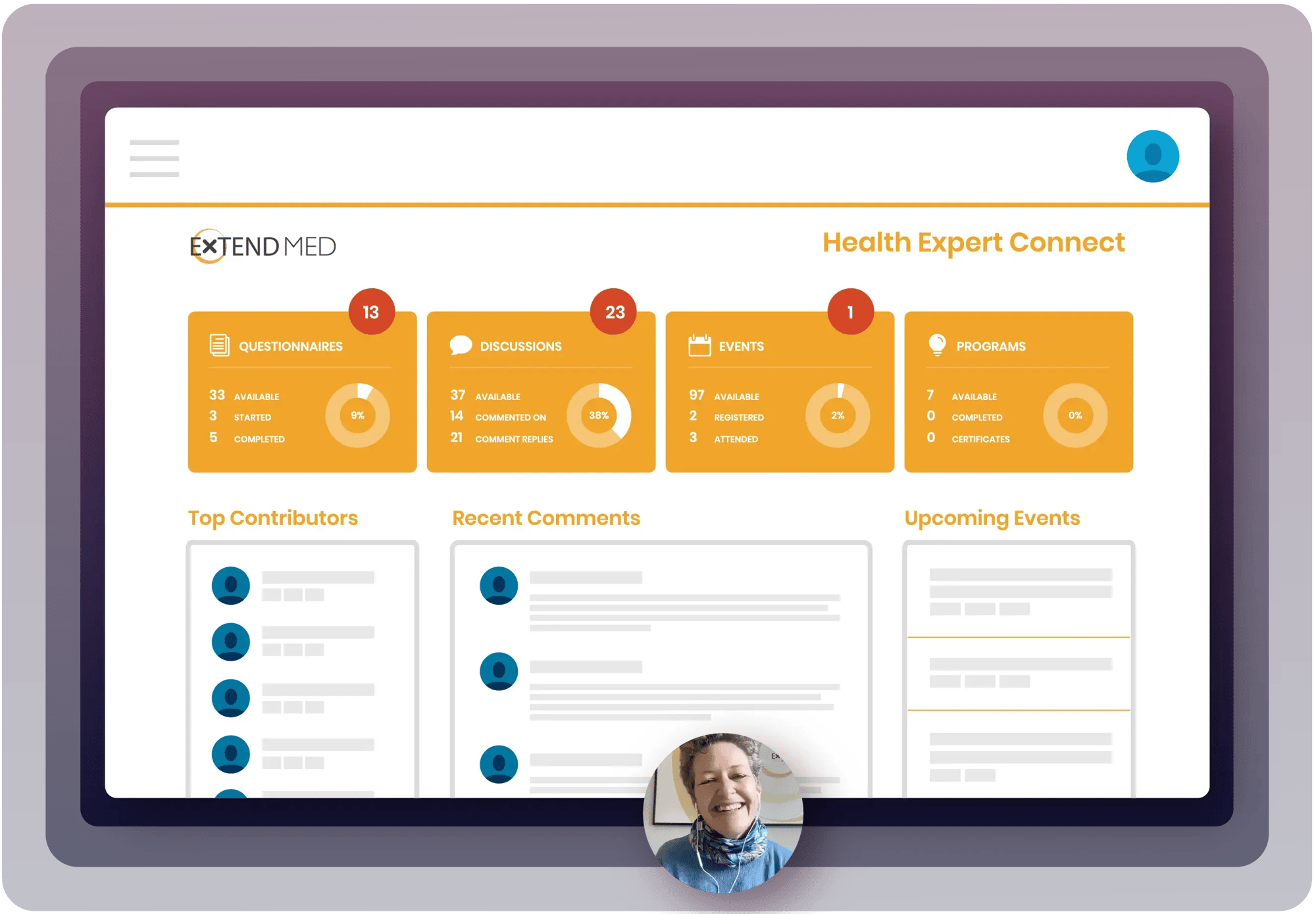
Ours does! Health Expert Connect™ profiles carry bios, affiliations, therapeutic focus, headshots and specialty communities.
- Advisors complete their own profiles.
- You can bulk upload from an existing database.
- Client teams get permission-based visibility.
- And every profile links to that expert's full meeting history across your programs.
The practical difference shows up when you're planning. With calendar slots, you know who you met. With KOL profiles, you know who you should be meeting, why and what you discussed last time.
What happens after the meeting ends
At a large congress, your team might run 10 to 50 meetings across a few days. Traditionally, someone spends the following two weeks turning scribbled or phone-taken notes into a client-ready report.
Health Expert Connect™ includes AI-assisted meeting summaries. Staff upload interview notes or structured summaries, the system generates a draft with key themes, sentiment and follow-up flags, and a person reviews and approves it before anything goes out. It’s human-in-the-loop at every step, which is how it should be. The point is that the work scales without your headcount scaling alongside it.
Beyond the individual meeting, the platform supports aggregate analysis across all meetings in a program, so you can see themes rather than reading 40 separate summaries. (We're actively expanding this capability, and I'd rather tell you what's live today than oversell a roadmap.)
Cvent has announced AI meeting summaries for Jifflenow, currently in development. From what they have published, those capture a single meeting—notes, a recording, a rep's observations—and produce a summary that flows into Salesforce for sales follow-up. That is a different job from synthesizing themes across forty congress conversations and carrying them into a medical affairs strategy.
The key question here: When a congress ends, what does this platform give you besides a list of who showed up?
Service model and speed
Jifflenow is software you configure and run yourself, and by most accounts it does that well—reviewers rate it highly on ease of setup and support. That's not a criticism, it's just what it is: infrastructure you configure and run yourself.
We work differently, because small and mid-size teams need us to. Every ExtendMed client gets a dedicated senior program manager. We handle agenda design, scheduling, moderation and executive summaries. And we build fast when a client needs something specific.
For example, when Mediar Therapeutics needed the ability to route targeted questions to specific subsets of advisors during an asynchronous discussion, we built and shipped that feature in under a week.
That responsiveness is difficult to get from a large-scale SaaS vendor, and it's the main reason smaller teams choose us.
Let's talk about pricing (since nobody else will)
Cvent and Jifflenow publish no list prices. Not on the Cvent pricing page, not on the Jifflenow product page. Both route you to a quote request form. We see this a lot.
G2 confirms no vendor-supplied pricing on Jifflenow's profile.
And Cvent lists Jifflenow under add-ons to its core enterprise platform, which suggests a base Cvent license is typically a prerequisite.
I want to be careful here: We don’t know what exactly Jifflenow costs, and neither will you until you ask them. That is the point. The pattern is quote-gated with a likely base-platform dependency, and you will be some way into a procurement cycle before you see a number.
We publish ours! Here it is: Projects start at $20,000 to $25,000 with no enterprise minimums. If you need one congress to start, run one congress.
ExtendMed vs. Jifflenow: a detailed comparison
Here’s a quick-reference line-by-line comparison.
| Feature | ExtendMed | Jifflenow (Cvent) |
| Best fit | Small to mid-size pharma, biotech and medical device companies | Enterprise sales and marketing ops teams, any industry |
| Industry focus | Built specifically for pharma and life sciences | General B2B. Reference customers are tech and telecom |
| Advisory boards | Full bookend methodology with sync and async engagement | None. Scheduling only |
| Congress 1:1 scheduling | Single and multi-room, KOL self-scheduling, conflict prevention | Self-service booking, expert matching, conflict prevention, check-in |
| KOL profile management | Bios, affiliations, therapeutic focus, specialty communities, bulk upload | Meeting attendees only. No clinical context |
| Sunshine Act compliance | Native: CMS Open Payments mapping, NPI validation, state transparency, ToV tracking | Not in Jifflenow. Sold as separate Cvent products |
| Advisor contracting | DocuSign-integrated, CV and W-9 processing, completion checklists | None |
| AI capabilities | AI-assisted meeting summaries with human review, cross-meeting analysis | Announced: meeting recordings, summaries and insights with Salesforce integration. In development, not yet released |
| Communications | Email, SMS and WhatsApp reminders with response tracking; all correspondence stored centrally against the advisor record | Email meeting invitations and configurable reminders with summary reporting |
| Service model | White-glove with dedicated senior program managers. Custom features in days | Self-service software; implementation timeline not published |
| Contract terms | Flexible and program-based. No long-term lock-in | Sold as a Cvent add-on |
| Pricing | Published: $20,000 to $25,000 to start, no enterprise minimums | Not published |
Where the two systems genuinely overlap
I don't want to overstate the comparison. On core scheduling mechanics, Jifflenow and Health Expert Connect™ do comparable things:
- Self-service booking
- Room and expert matching
- Conflict prevention across rooms and time slots
- Automated confirmations and reminders
Health Expert Connect™ adds a few things that matter at a medical congress specifically:
- KOLs self-schedule directly from an outbound invitation, which removes friction with senior physicians who have no interest in wrestling with a booking tool.
- Multi-room scheduling lives in one project with duplicate-invitation prevention, so the same expert doesn't get three competing invitations from three teams.
- Reminders go out over SMS and WhatsApp, which matters for international KOLs.
But if scheduling is genuinely all you need, and you have no advisory boards, no Sunshine Act exposure and no interest in what happens to the insights afterward, Jifflenow will schedule your meetings. I'd rather say that plainly.
Who gets the most from working with us
Teams that fit us well usually:
- Run both congress engagement and advisory boards and want one system for both
- Have Sunshine Act and Open Payments obligations that need to be native, not bolted on
- Are small to mid-size and need senior attention rather than a support queue
- Want program-based terms without a multi-year commitment
- Need KOL intelligence that carries therapeutic context, not just meeting logs
- Are tired of reconciling advisor data across separate tools

Ready to see the difference?
If you're evaluating Jifflenow for congress engagement and your team also runs advisory boards, has compliance obligations or wants the insights to go somewhere after the meeting ends, we should talk.
Health Expert Connect™ gives you congress scheduling and advisory boards in one platform, with Sunshine Act compliance, KOL profiles and AI-assisted reporting built in. Senior program management included. No enterprise minimums.
Request a demo of Health Expert Connect™ →
No pressure. No spam. Just a practical conversation about what's possible when your engagement strategy has the right foundation under it.