
If your time is short:
Most pharma teams know they need to engage HCPs. Fewer have figured out how to do it at scale without drowning in logistics or losing the personal touch.
This playbook breaks down the core engagement modalities that actually work in 2026, how to sequence them across a product lifecycle and what it takes operationally to make your HCP engagement strategy repeatable instead of reinvented every quarter.
If you run engagement programs and are tired of one-off programs that produce one-off results, this guide is for you.
There’s a problem with HCP "engagement" in pharma today. We see it all the time: A team runs an advisory board and it goes well. The insights are valuable.
Six months later, they need another round of input, and they essentially start from scratch. New vendor conversations, new contracts, new compliance paperwork. Maybe some of the advisors from the first board kept a spreadsheet. Maybe not.
Or a Commercial team is managing speaker programs across multiple territories. The field reps are submitting requests by email. The compliance team is reconciling expenses in a separate system. Nobody has a clear picture of how many programs ran last quarter, let alone whether they moved the needle.
Neither of these is a “strategy.” They’re event planning with extra steps.
The core problem is that most pharma teams treat HCP engagement as a series of isolated projects rather than an integrated discipline. They staff up for individual engagements, pick tools that solve one problem at a time and wonder why they can't draw a line between their engagement activities and their business outcomes.
In 2026, limping along like this isn’t good enough. The teams that are making the best relationships and harvesting the best insights from them are the ones who've actually built engagement infrastructure, not just engagement programs.
What Scalable HCP Engagement Looks Like Today
Before getting into specific tactics, let’s first frame what I mean by "scalable."
Scalable doesn't mean bigger. It means repeatable.
- It means your second advisory board takes half the setup time of your first one because the workflows already exist.
- It means your speaker programs in Q3 run on the same infrastructure as Q1 without your team having to rebuild anything.
- It means when a new therapeutic area launches, you're plugging into an existing system rather than inventing a new one.
Scalable engagement usually has three characteristics:
It's centralized. All your engagement activities, whether that's advisory boards, speaker programs, congress touchpoints or virtual education, run through one system. Your KOL data lives in one place. Your compliance tracking doesn't require a second platform. Your reporting rolls up across programs instead of living in silos.
It's sequenced. Your engagement modalities build on each other. An advisory board generates insights that shape your speaker program messaging. Your congress strategy identifies new KOLs who flow into your next advisory board. One touchpoint sets up the next.
It's measurable. You can answer basic questions. How many hours did our advisors contribute? Which speakers generated the most audience engagement? What percentage of our KOL network has been active in the past 90 days? If you can't answer these, you're guessing.
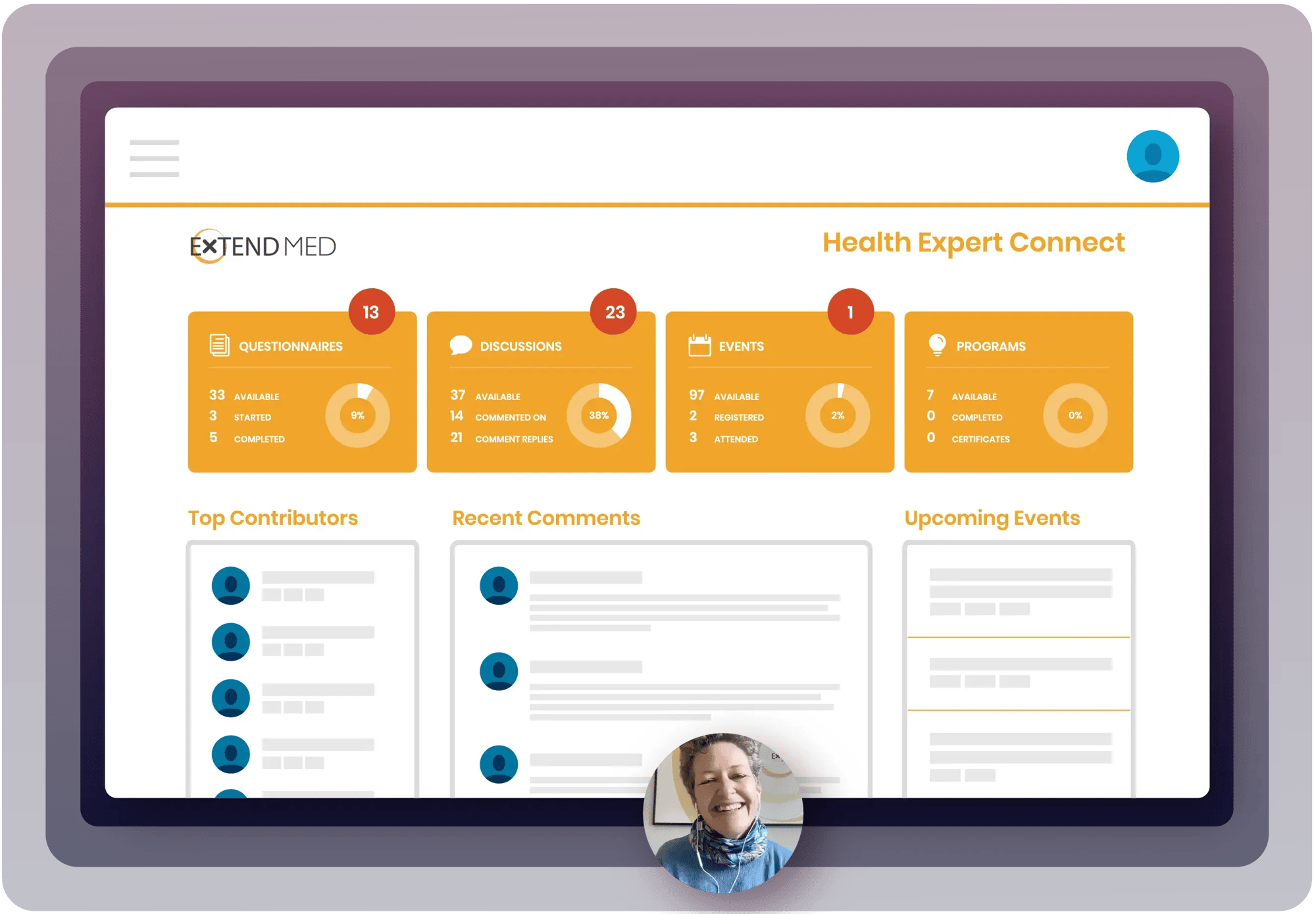
This matters because the nature of engagements has shifted. HCPs have less time and higher expectations for convenience. The teams that make engagement easy, flexible and respectful of busy schedules get more participation, richer insights and stronger long-term relationships. A centralized engagement platform like Health Expert Connect™ is purpose-built to make this operational, not just aspirational.
We help teams build the infrastructure they need to be scalable. Learn more about our platform and get in touch to schedule a personalized demo.
Running a Modern Advisory Board
Too many teams are running their ad boards the same way they did 10 or more years ago. The traditional model, fly 12 experts to a hotel, talk for four hours, collect notes, go home, still works for certain situations. But the best teams have moved well past that as their default.
There’s been a natural shift to async-first ad board models. The most productive advisory boards we run now use a multi-touch format. We developed what we call a "bookend" approach: open with a live synchronous session where advisors meet, build rapport and align on the strategic context. Then shift to an asynchronous phase, typically two to three weeks, where advisors respond to targeted discussion prompts on their own schedule. Close with a second live session to synthesize and prioritize.
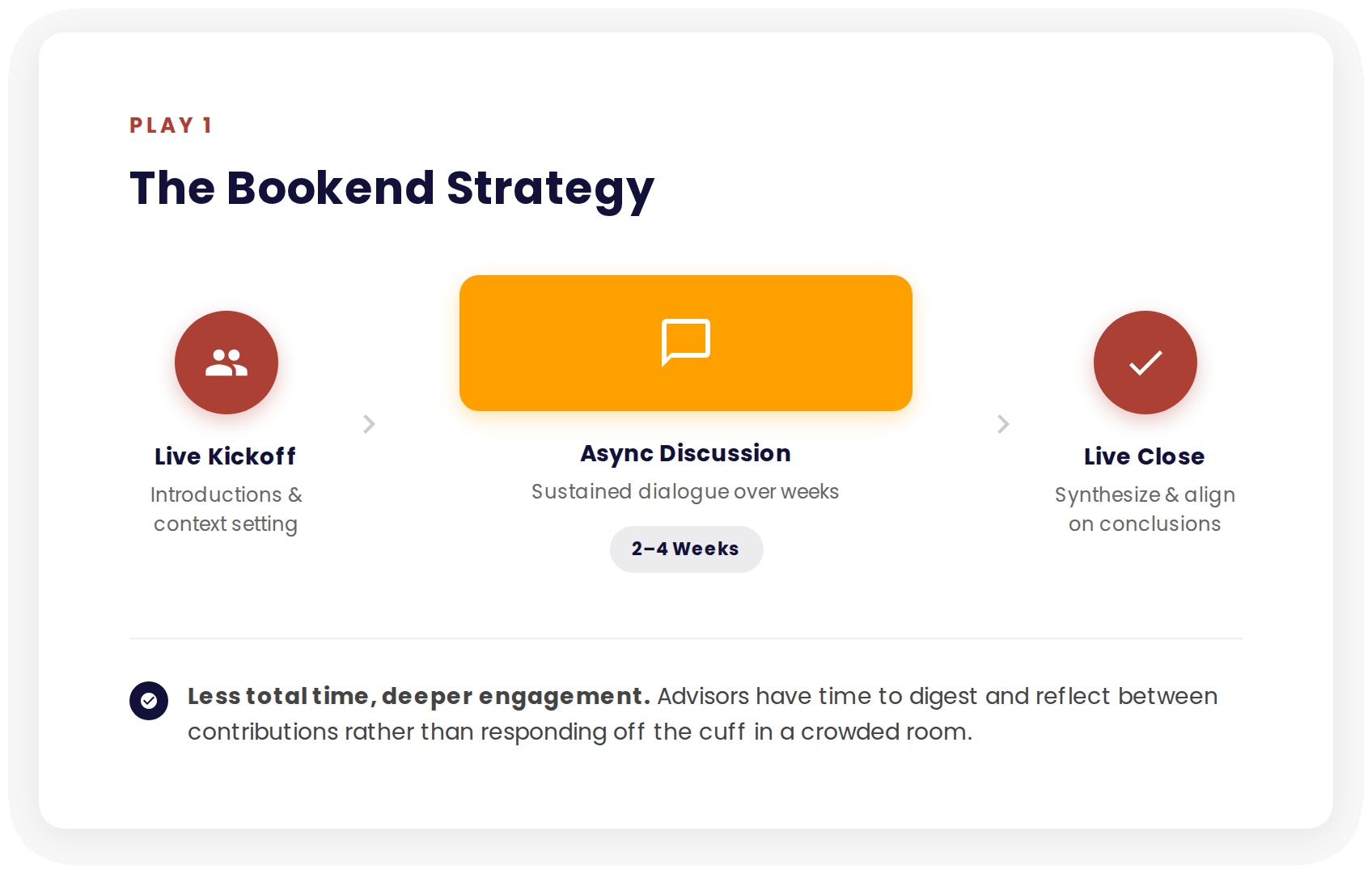
This outperforms the traditional model because it respects how specialists actually work. A pulmonologist who can't block four hours on a Tuesday can absolutely spend 20 minutes on a Wednesday evening composing a thoughtful response to a clinical question. And the depth you get when someone has time to think, review the literature and craft a considered answer is often far better than what comes out of a pressured live discussion.
We saw this clearly with a biotech client running an interdisciplinary board across three specialties. Using the bookend model, advisors averaged over five hours of total participation each. Several top contributors posted upwards of 25 individual comments across discussion threads. That depth doesn't happen in a half-day meeting. It just doesn't.
Two other key points about modern ad boards:
- Cross-pollination is replacing siloed boards. The old instinct was to segment advisory boards strictly by specialty. Hepatologists in one room, rheumatologists in another. The teams getting richer output are deliberately mixing disciplines and letting the cross-functional dialogue generate insights that no single-specialty board would surface. It requires more thoughtful facilitation, but the strategic yield is significantly higher.
- The one-and-done model is dying. The teams getting real strategic value treat advisory boards as ongoing relationships, not isolated events. The advisor roster carries forward. The engagement data accumulates. The follow-up board starts where the last one ended instead of relitigating context that was already established.
What makes this work
Running multi-touch, async-enabled advisory boards at scale requires a platform that handles the full lifecycle in one place.
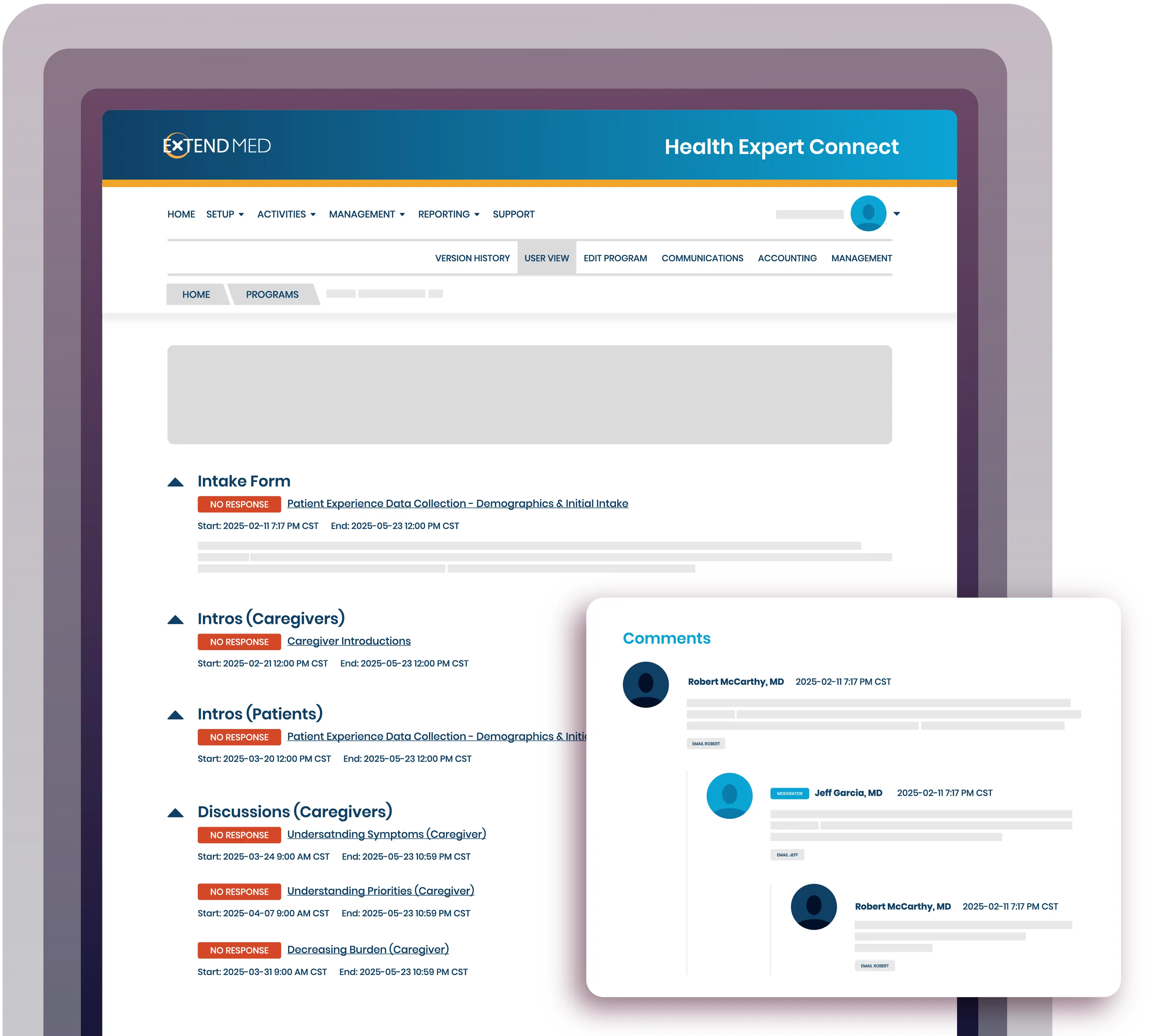
Health Expert Connect™ was built for exactly this. Every interaction is captured, time-stamped and reportable. You're not reconstructing what happened from someone's meeting notes three weeks later.
- Advisor profiling and NPI validation, contracting and FMV tracking
- Asynchronous meetings with polls and Q&A
- Asynchronous discussion boards with threaded conversations
- Survey deployment and post-board analytics.
Taking Speaker Programs From a Logistics Burden to a Growth Engine
If you manage speaker programs at any real volume, you already know the operational complexity in contracting, training, field requests, venue coordination, compliance tracking, expense reconciliation, sunshine reporting and everything else.
At 50 programs a year, it's manageable. At 200+, it's a full-time infrastructure challenge. What's evolved in 2026 isn't the speaker program itself. It's the recognition that the operational layer is either your biggest bottleneck or your biggest competitive advantage.
Speaker programs are one of the modalities most transformed by tech solutions, so let me break this down.
Workflow automation is table stakes now
The teams still managing field requests through email and tracking compliance in spreadsheets are leaving growth on the table. I mean that literally! One of our agency partners was managing several hundred programs a year with patchwork tools before centralizing on a single platform.
After implementing guided request workflows, automated approval chains and real-time budget tracking, they didn't just keep up with existing volume. They started winning new business they would have previously had to pass on.
When a major pharma company questioned whether they could handle a nationwide speaker bureau, they brought us into the pitch as technology partners and closed a significant multi-year engagement. As their team told us: "Having a system that can capture compliance, manage programs efficiently and scale with us allows us to work with larger bureaus."
That's the shift. Technology isn't just an efficient play for speaker programs anymore. It's a growth enabler. When your operations are tight enough to handle more volume without adding headcount, you can pursue opportunities you'd otherwise decline.
The rep experience matters more than people think
- If the request process is cumbersome, they'll work around it.
- If venue selection is a hassle, they'll cut corners.
The best speaker platforms now put a guided, mobile-friendly workflow in the rep's hands: choose a topic, pick a date (with lead-time enforcement), select a venue via integrated maps and request a speaker filtered by distance and eligibility. Four steps. Compliance guardrails are applied automatically with a budget auto-generated.
The downstream effect is better data, fewer compliance issues and reps who actually use the system instead of emailing their program manager.
Speaker dashboards are changing the KOL relationship
The speaker experience has evolved, too! Speakers who manage their own profiles, access training materials, review upcoming engagements and track contracts through a single dashboard are more engaged and more accountable. It's a small thing operationally but it signals professionalism.
And it reduces the back-and-forth that eats up program management hours.
How we make this work
Health Expert Connect™ manages the entire speaker program lifecycle from rep request to Sunshine reporting. Reps build compliant programs in four guided steps.
Business rules, FMV rates and territory guardrails apply automatically. Speakers manage contracts and training through a dedicated portal. Program managers see real-time dashboards for spend, utilization and program status.
Here’s a more complete walkthrough of what our platform can do:
Turning Expensive Face Time at Congresses and Conferences into Compounding Relationships
Everyone knows congresses and conferences are expensive. What most teams still haven't fixed is the post-congress drop off.
Here's the pattern I see repeatedly: a Medical Affairs team has 30 productive KOL conversations at a major congress. The MSLs come back energized. There are notes in various formats, some in CRM, some in email, some in someone's head. Then six months of silence until the next congress. That's not a strategy. That's an expensive networking event!
Three points here:
- The teams doing this well treat congress engagement as a funnel, not an event. Every meaningful interaction gets captured in a system. New KOL contacts flow directly into a stakeholder database. Follow-up actions are assigned and tracked. The hallway conversation at ASH becomes an advisory board invitation in January. The promising investigator you met at ASCO gets queued for a speaker recruitment conversation.
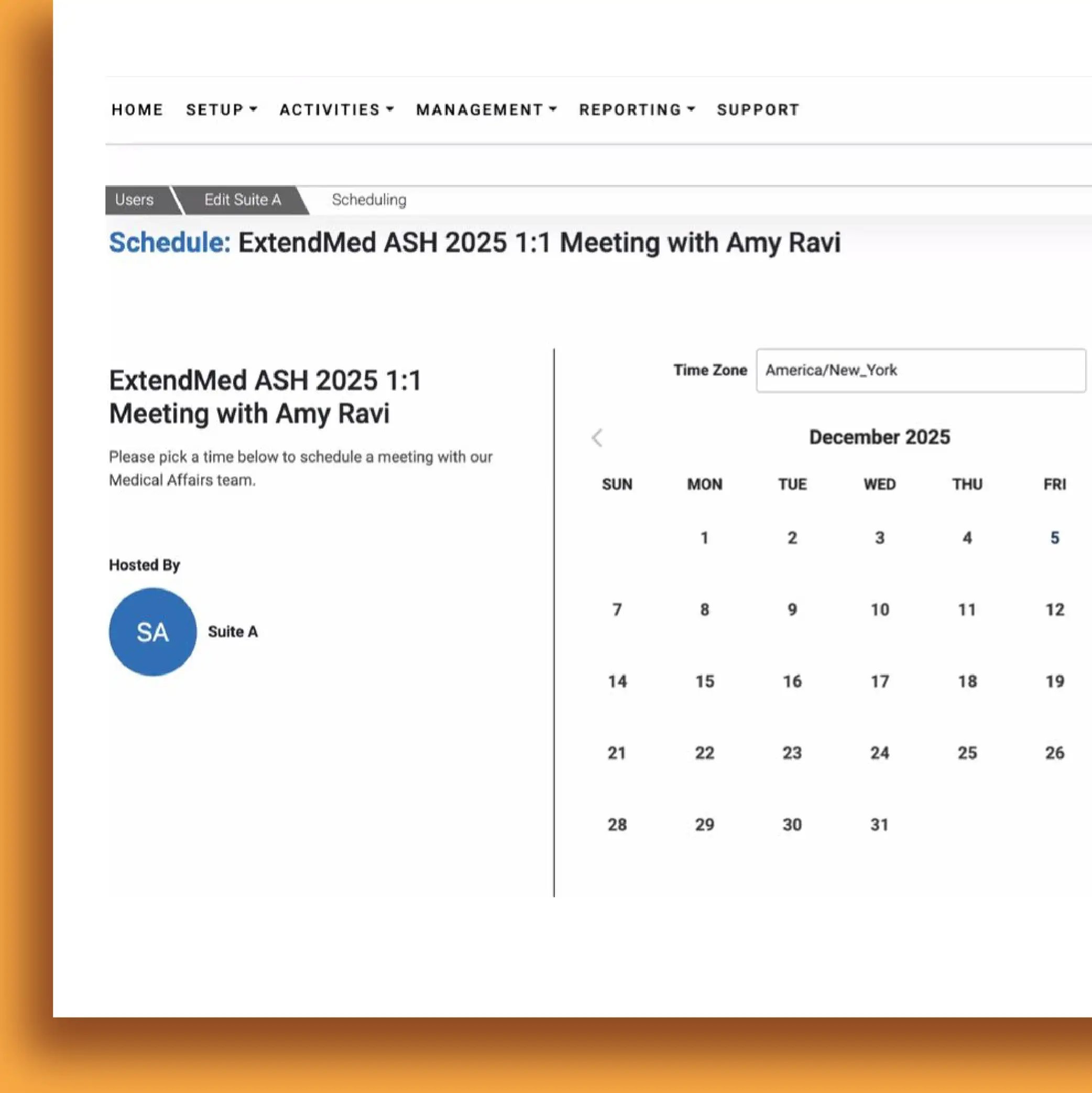
- Pre-congress coordination has gotten more sophisticated. The best teams are identifying and scheduling target KOLs weeks in advance, running centralized scheduling across their on-site team and tracking real-time attendance at their own events. Product theaters and satellite symposiums now integrate mobile registration, live polling and immediate evaluation capture. The data is available before the team leaves the venue.
- On-demand content extends the congress investment. Live congress events, product theaters in particular, are being recorded, edited and redistributed as on-demand content. A 45-minute product theater at a congress becomes a series of shorter on-demand segments that live in a resource library for months. That's how you get leverage from a one-time investment.
How we make this work
Our platform supports the full congress cycle: pre-congress KOL scheduling, on-site event management with mobile registration and polling, real-time attendance tracking and post-congress follow-up routing. New contacts flow directly into your stakeholder database. No more post-congress scrambles.
Patient Experience Research Accessible to Smaller Teams
This is one of the biggest shifts I've seen in recent years. Patient experience data collection used to be the domain of large pharma companies with enterprise platform budgets. In 2026, that barrier is breaking down, and it needs to.
The FDA now offers some sponsors a dedicated section for "voice of the patient" in submissions. This data isn't optional anymore. And for rare disease programs in particular, where patient populations are small and geographically dispersed, the methodology has to be both technologically sophisticated and deeply human.
We worked with a consulting firm on a project capturing patient experience data for an FDA submission on a rare, progressive neurological disease. The research required separate discussion spaces for patients and caregivers, validated clinical assessments (CATS, NPI-12, CBFS) deployed as online surveys and flexible interview scheduling for participants with significant cognitive limitations.
The lead researcher had previously used enterprise platforms for similar work but found them cost-prohibitive for her biotech client. As she told us, the enterprise platforms are really only viable for large, established pharma companies. For smaller biotechs moving their pipelines forward, those price points are simply out of reach.
Our model made it possible. Same caliber of research methodology. Accessible pricing. And an outcome that went beyond data collection: the platform created an unexpected sense of community for isolated families dealing with a devastating diagnosis.
The takeaway for engagement leaders: if you're working in rare disease or any area where patient voice matters for regulatory strategy, the tools to do this well are more accessible than they were even two years ago. Don't settle for less rigorous methods because of budget constraints.
Purpose-built for multi-modal research
Health Expert Connect™ supports asynchronous discussion forums with separate stakeholder communities, survey deployment including validated clinical instruments, resource centers for participant materials and scheduling for 1:1 interviews.
Flexible pricing means smaller biotechs can access the same research infrastructure as large pharma.
See how we partnered with Imbue Partners to support a biotech’s FDA submission for a rare leukodystrophy treatment, using the Health Expert Connect™ platform to gather patient and caregiver insights through forums, surveys and interviews:
Sequencing Your Engagements
Running individual programs well is necessary but not sufficient. The real leverage comes from sequencing them, and this is where most teams fall short. Not because they don't understand the concept, but because their tools make it operationally difficult.
When your advisory board data lives in one system, your speaker roster in another and your congress contacts in someone's Outlook, sequencing is a manual exercise that depends on institutional memory. When it all lives in one platform, sequencing becomes a workflow.
Here's what lifecycle sequencing looks like when it's working:
Pre-launch
Advisory boards generate strategic insights and surface the thought leaders who communicate clearly and engage deeply. Those are your future speaker candidates. Patient experience research captures the data you'll need for regulatory submissions and commercial messaging. Every engagement touchpoint is also a talent identification opportunity.
Launch
The KOLs you identified pre-launch become your trained speakers. The messaging validated through advisory boards becomes your speaker curriculum. Your congress strategy activates the broader network. Virtual education extends reach to the HCPs you can't touch through live programs alone. This should feel like a natural handoff, not a cold start.
Post-launch
Follow-up advisory boards capture real-world feedback from clinicians who now have actual prescribing experience. Speaker program data reveals which geographies and audiences need more investment. The relationship infrastructure you built pre-launch pays dividends as an ongoing strategic asset, not something you have to rebuild.
The keyword here is infrastructure! The engagement modalities themselves haven't changed much. What's changed is the expectation that they'll be connected, that data will flow between them and that the second year of a program will be meaningfully better than the first because you're building on what you learned.
This kind of lifecycle sequencing only works when all your engagement data lives in one system. When your advisory board roster, speaker directory, congress contacts and patient research participants are all managed through one platform, you see the full picture. You know which KOLs are highly engaged across multiple modalities. You know where your gaps are. And you make resource decisions based on data rather than gut feel.
What to Demand from Your Engagement Platform
I'll be direct about this. After 25+ years in this space, I've seen teams waste enormous amounts of time and money on platforms that solve one problem at a time. You buy an advisory board tool. Then a separate speaker management tool. Then bolt on a CRM for KOL tracking. Each works fine on its own. Together, they create data silos and manual reconciliation work that eats up the efficiency you thought you were gaining.
Here's what I'd push for:
- Multi-modal in one system. Synchronous meetings, asynchronous discussions, surveys, content libraries and event management should all live in the same platform. When you need to shift from a live advisory board to an async follow-up, that should be a workflow decision, not a procurement decision.
- Compliance as infrastructure, not afterthought. FMV tracking, NPI validation, aggregate spend reporting and audit trails should be native. If your compliance workflows live in a separate system from your engagement workflows, you're creating risk and extra work simultaneously.
- Flexible terms. Not every program needs a 12-month enterprise commitment. Pilot projects, single-engagement contracts and scaled enterprise deals should all be on the table. We offer pilots starting at $20,000-$25,000 because we believe teams should be able to prove value before committing to a larger relationship.
- Real partnership, not just a login. Every client should have a dedicated program manager who understands their business and can advise on program design. We've built custom features in under a week when a client needed something specific during a live engagement. That's what service looks like.
As one of our longtime clients put it: "In 25 years of working with vendors, ExtendMed stands at the top of the list. They're strategic partners, arming my staff with vital statistics and sharing their experience and ideas for the future. They're nimble and they understand our business."
Let’s Talk About Your Engagement Infrastructure
If your team is running engagement programs on patchwork tools and you're ready to centralize, we should have a conversation.
We work with small to mid-size pharma, biotech and medical device companies, as well as medical communications agencies, to build the engagement infrastructure that scales. No long-term commitment required to start. Prove the value with a pilot. Scale from there.
Request a demo of Health Expert Connect™ →
No pressure. No spam. Just a practical conversation about what's possible when your engagement strategy has the right foundation under it.