

If your time is short:
Building a peer-to-peer speaker program from scratch, or rebuilding one that needs modernizing, requires more than recruiting good faculty and getting decks approved.
The teams whose programs actually scale start with measurement, design the rep workflow before the compliance workflow and treat compliance as part of the operating model from day one.
This guide walks through the build sequence in the order that matters, with the operational details I see teams skip and the platform decisions that make or break execution.
If you’ve managed speaker programs for any length of time, you’ve probably noticed that the tools, processes and expectations around them are changing fast.
- Field reps expect mobile workflows.
- Compliance scrutiny is tighter on aggregate spend, FMV documentation and Sunshine reporting.
- HCP audiences are harder to recruit and less patient with friction in the system.
- Finance keeps asking sharper questions about ROI on programs that used to get a pass on measurement.
The good news here is that the technology layer around managing speaker programs has matured. Building a program in 2026 doesn’t have to mean assembling six tools and hoping the data reconciles at the end of the quarter. Now you can pick the right operating system for your bureau and configure it to fit how your team actually works.
This guide gives you a look at our model. I'll tell you the order I advise to build in, where teams typically waste effort and where the platform decisions you make early will save you (or cost you) for years.
Step 1: Define Success Before You Define Speakers
Many, if not most, program failures I've seen trace back to this step being skipped.
Teams jump straight to faculty recruitment because that feels like progress. But without an upfront definition of what the program is supposed to do, you can't tell whether it's working. "Increase awareness" doesn't count in an era where modern tooling can show you so much more.
Pick three to five concrete success metrics tied to your brand goals. Examples that mean something operationally
- HCP audience reach (unique attendees per quarter)
- Quorum quality (audience profile match against your target list)
- Speaker utilization (percent of bureau actively engaged each quarter)
- Cost per qualified attendee (program spend divided by target HCP attendees)
- Post-program prescribing trend lift in geographies where programs ran
If you can't measure it, don't promise it! The teams I see winning the budget conversations in 2026 are showing finance and compliance the same dashboard the field uses.
What good measurement looks like in practice:
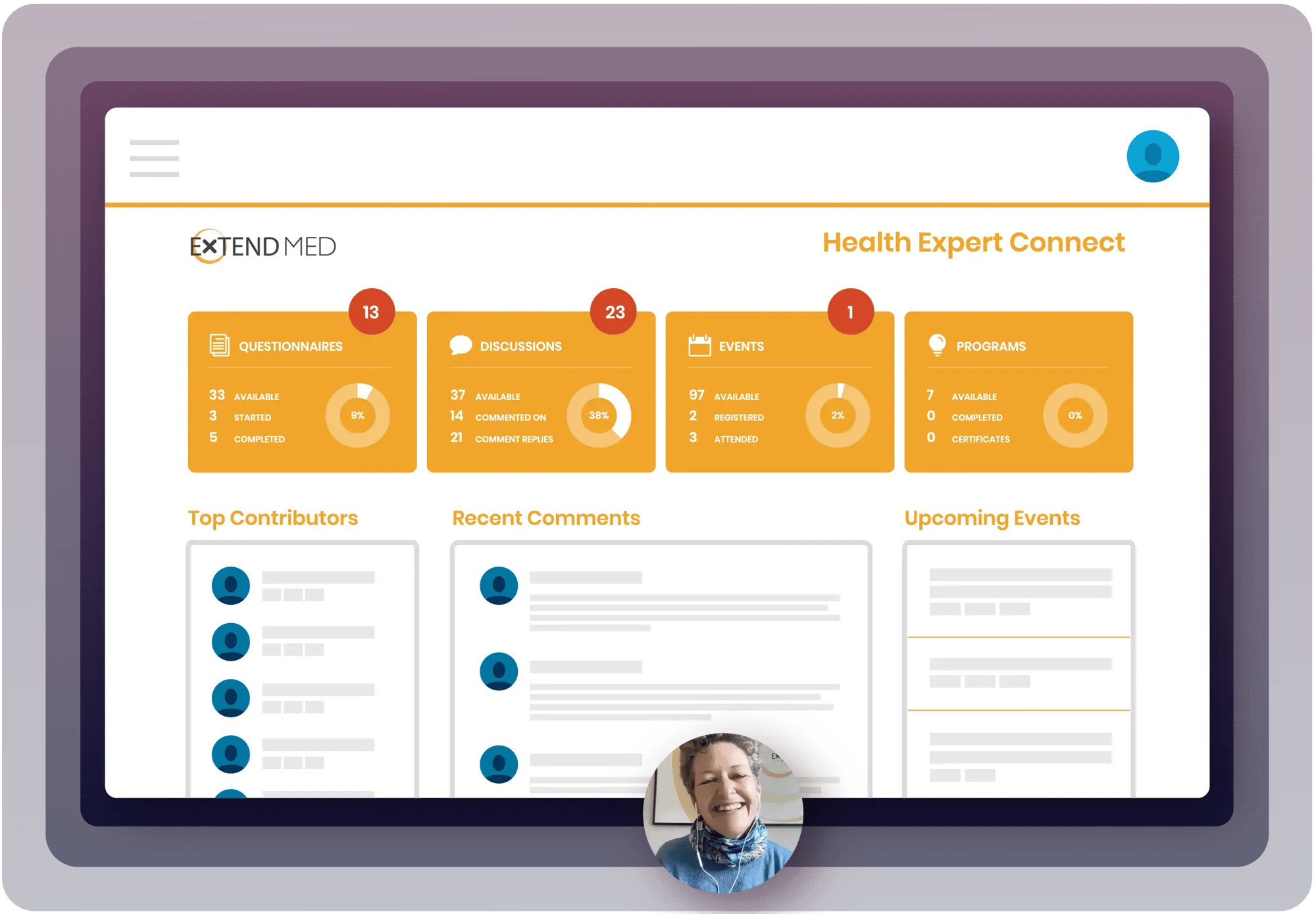
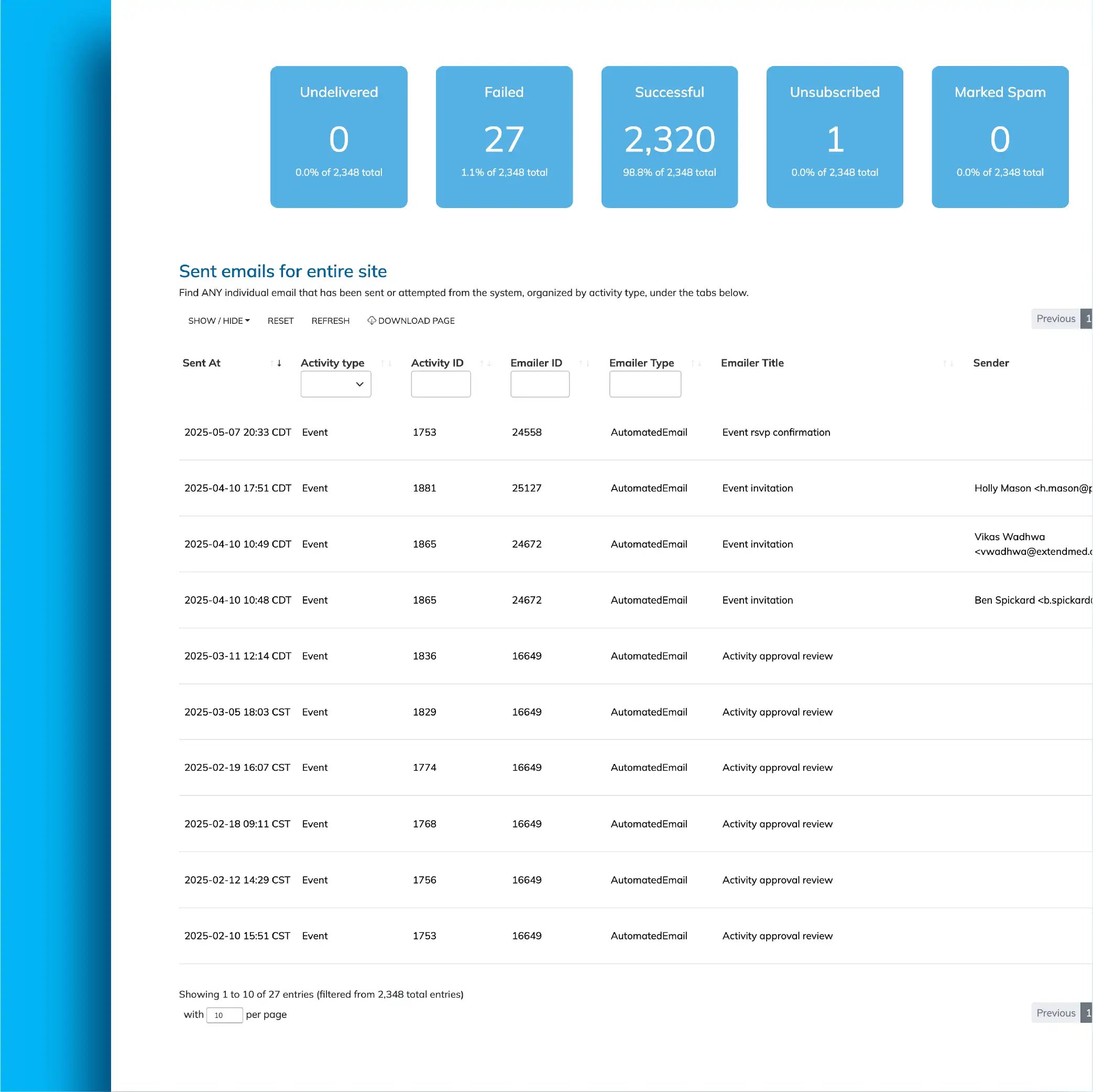
Health Expert Connect™ tracks attendance, NPI validation, aggregate spend with FMV breakdowns, speaker utilization, email deliverability and program-level ROI on one dashboard. The reporting is built into the workflow, not bolted on at year-end.
Step 2: Compose the Bureau, Don't Just Recruit It
Another common mistake here is recruiting based on availability rather than design.
A well-composed speaker bureau has structure:
- Geographic coverage that maps to your field force.
- Specialty mix that matches the audience profile you want to reach.
- Tier balance between heavy-hitter KOLs who carry credibility but have limited availability, and emerging voices who have time and growing influence.
- Demographic representation that reflects the actual prescriber base, not just the inbound list of HCPs who responded to your last email.
Whenever possible, recruit against that map. Don't recruit and then map.
The onboarding workflow here matters quite a bit: NPI validation, license lookups, FMV documentation, bio and CV uploads, headshot capture, contracting via DocuSign, training assignments. Every one of those is a friction point.
If your platform makes them quick to complete, speakers finish onboarding and start contributing. If not, you'll be chasing PDFs for six weeks per faculty member and losing the energy you built during recruitment.
How Health Expert Connect™ handles speaker onboarding:
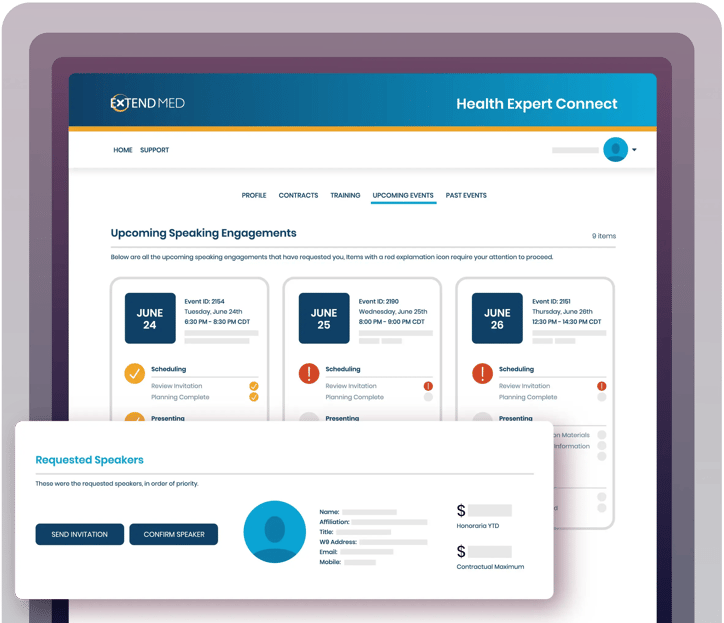
NPI validation and state license lookup happen right on our platform. Bio/CV upload, photo, contracting via DocuSign and FMV rate documentation are part of one guided profile completion flow. Speakers see their own dashboard with contracts, training status, upcoming events and past events from day one.
Step 3: Build the Training and Content Cycle, Not Just the Launch Deck
A lot of teams build a great launch slide deck and then handle every subsequent update through email and PowerPoint chaos.
In 2026, that's both tiring and an audit risk. PhRMA Code expectations on content control, training and modification tracking aren't going to relax. The teams that operate cleanly now treat the slide deck and the speaker training tied to it as a unified asset, with version history, training renewals and approval logs all tracked in one place.
When you build the cycle:
- Map every approved slide deck to its training requirement.
- Set training renewal triggers based on deck version, not the calendar.
- Track training completion for each speaker and deck, with timestamped logs.
- Lock the ability to confirm a speaker for an event until their training for that specific deck is current.
This may sound like a lot of rules. The point of building it into the platform from day one is that the rules enforce themselves. A rep can't request a speaker for a deck they're not trained on, and a program coordinator can't approve an event with a non-current training status. The compliance work becomes the workflow.
Training built into the speaker dashboard:
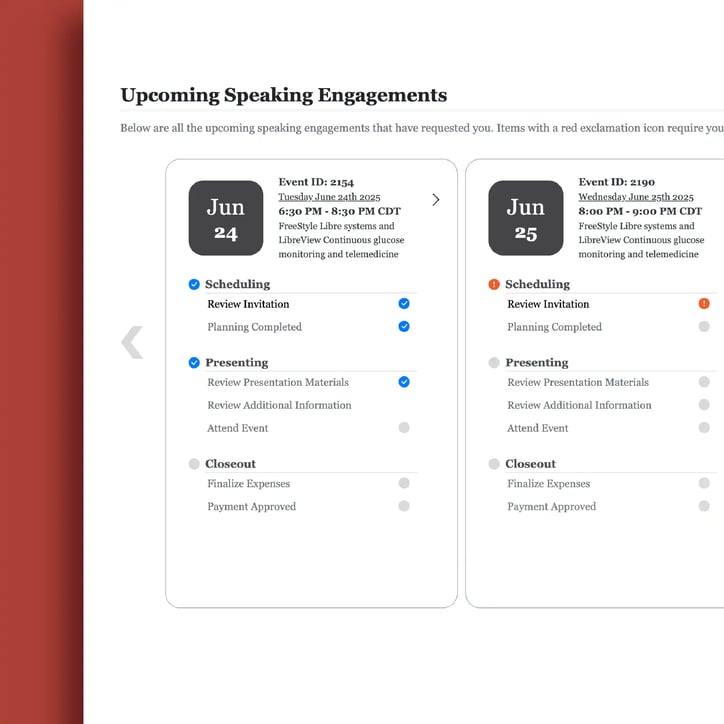
In Health Expert Connect™, speakers see deck-specific training status and renewals in their own portal. Coordinators see training compliance at a glance across the whole bureau. Speakers can't be confirmed for an event with a training gap on the assigned deck—the system blocks the path when needed. All these guardrails can be built right into the system.
Step 4: Design Your Rep Workflow Before the Compliance Workflow
This might sound backward for some teams, but let me explain why this sequence creates better results.
Most speaker program builds start with the compliance team's requirements and work outward. That's how you end up with a system that's audit-tight but the field force refuses to use. If reps don't use the system, you don't really have a system.
Picture the actual scene here:
- A rep is in the field, doing the calls she does every day.
- She lands on a moment: "I'm going to host a peer-to-peer event in Chicago. I have a quorum of HCPs who'd be interested. April 16 works. I want to book Ruth's Chris Steakhouse because we're asking people to give up an evening and they should get a good meal."
- Now she has to turn that intent into a compliant program request.
If that turn takes 30 minutes on her phone between calls, you have a working program. If it takes a desktop session, an email to a program coordinator and a week of back-and-forth, the rep will work around your system or stop bothering altogether.
Designing the rep request flow first makes it the easy path. Layering compliance as guardrails inside that flow, not as a separate workflow on top of it means reps do what feels natural and they stay compliant.
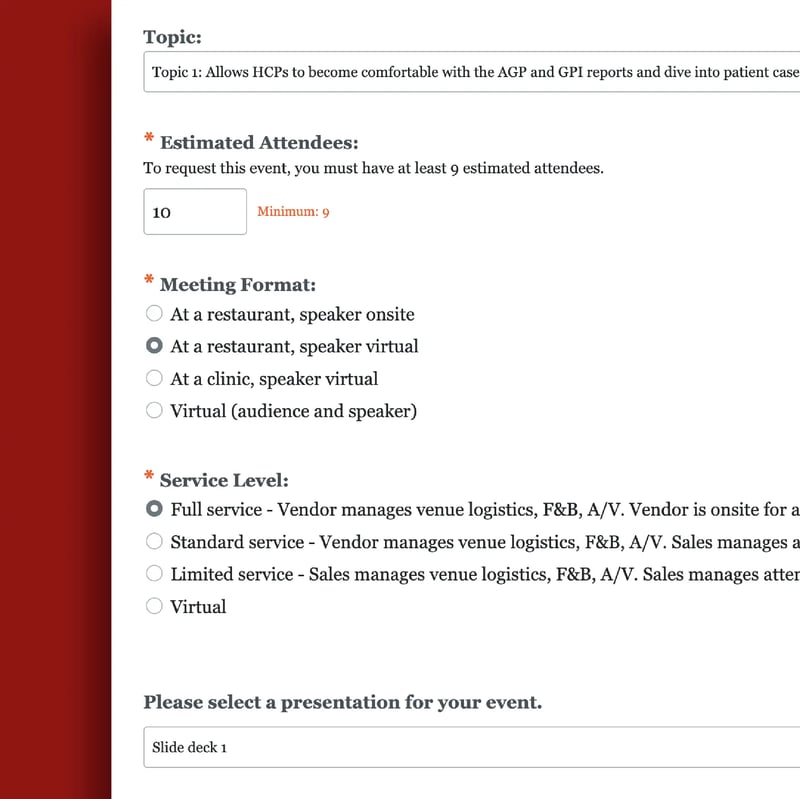
The flow that works (and the one we built into our platform):
- Topic. Rep selects from approved slide decks she's cleared to request.
- Date and time. Rep picks a date with lead-time enforcement built in. No more requests for events in 10 days when policy requires 21.
- Venue. Rep selects the venue through integrated Google Maps. Mileage and travel time auto-calculate. The address is attached to the request.
- Speaker. Rep filters available speakers by distance, specialty, training status and remaining annual cap. The platform won't surface a speaker who can't legally be confirmed for this program.
That’s just four steps with compliance enforced automatically, the budget auto-generated, and approval routing happening in the background.
One of our agency partners described what happened when reps got this kind of workflow: "Having the reps feel accountable in selecting the venue they want has been instrumental." Accountability shifts to the field. The program manager stops being a bottleneck.
The four-step rep request flow:
Topic, date, venue, speaker. Compliance guardrails (lead time, FMV, training status, remaining cap) apply automatically. Budgets generate themselves. Approvals route to the right person. Reps build requests in a few minutes.
Step 5: Plan HCP Audience Recruitment as Carefully as Speaker Recruitment
This is the step just about everyone underbuilds. You can have great faculty and clean decks, and your program will still stumble if the wrong 12 HCPs are in the room. (Or if 12 HCPs aren't in the room at all!)
Audience recruitment needs to be part of the program build, not an afterthought. Decide upfront:
- Who's the target audience by specialty, tier and geography?
- How will reps recruit (in-person, CRM-driven, list-based)?
- What's the invitation cadence including lead time, reminders, RSVP follow-up?
- How do you confirm NPI eligibility before the event, not after?
- What does the audience experience feel like (registration, materials, post-event follow-up)?
The teams making the audience side work are loading their CRM target lists directly into the program system. Reps can then see their entire target list with tier information, send compliant invitations, track RSVPs and confirm NPI in one flow. The HCP gets a clean registration experience while the rep has visibility into who's coming and who's not, in real time.
When this works, you stop running programs where two people show up because the rep was guessing about interest. You also stop running programs where the audience profile is wrong for the speaker. Those are the two ways audience recruitment kills programs and both are preventable given the tooling available now.
Step 6: Execute With Interactivity and Hybrid Flexibility
Whatever the format (live, virtual, hybrid), the engagement layer matters.
- For live programs, in-meeting polls, Q&A and quizzes turn a presentation into a discussion. They generate data: what questions did the audience ask, what topics resonated, and what knowledge gaps came up. That data feeds back into your next program design and your speaker training updates.
- For virtual and hybrid programs, the operational bar is higher. HCPs have less patience for technical problems on a virtual event than a live one. Your platform needs to handle the join experience, the audio/video quality, the interactivity and the attendance and NPI capture without breaking. AV and tech support during the event is not optional.
When this is set up right, hybrid expands your reach without making things more complex. A hepatologist who can't get to a Chicago dinner can join the broadcast. The attendance and engagement data flow into the same system regardless of how someone participated.
Step 7: Close Out Cleanly
The closeout is where most programs leak money and what I’d call “compliance integrity.”
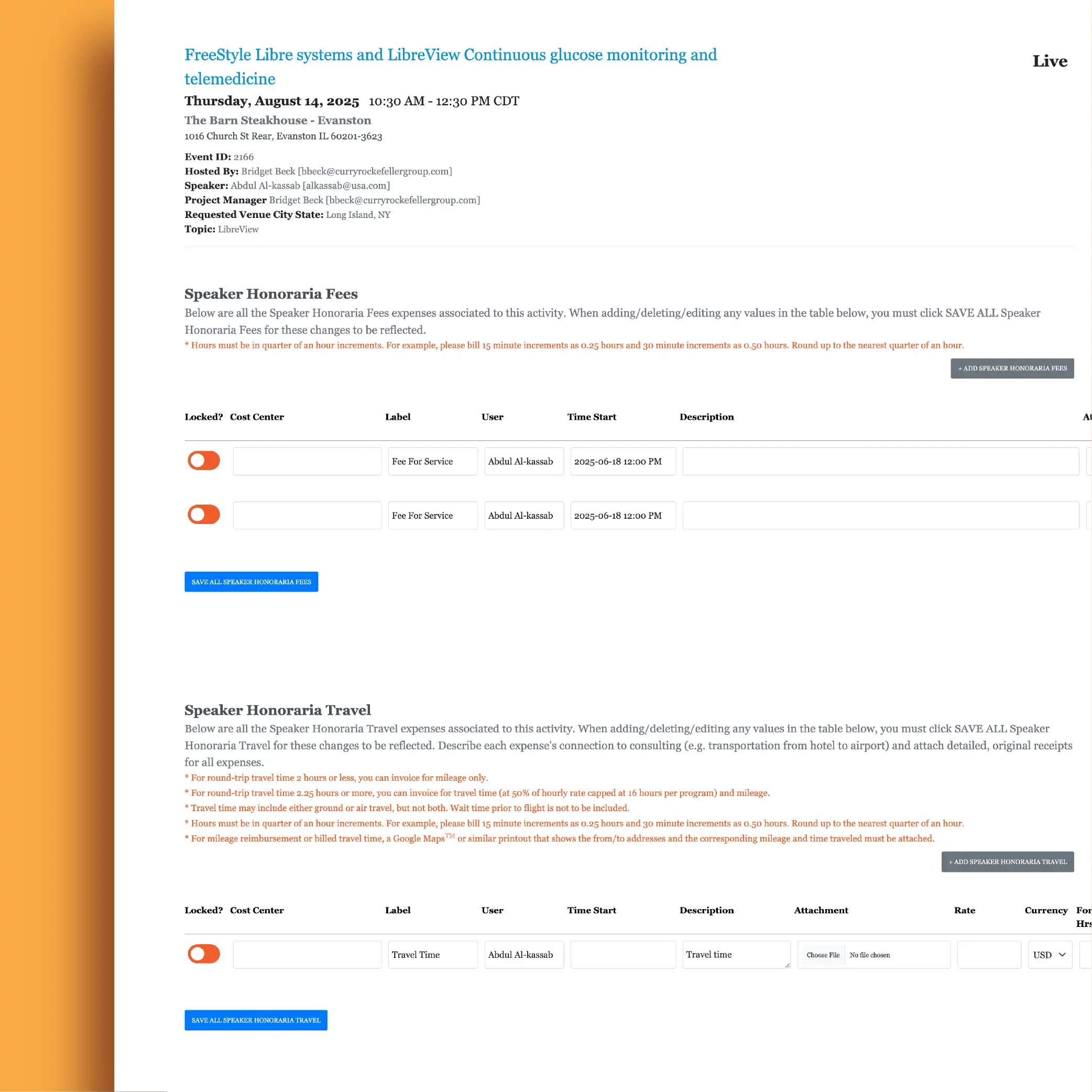
Speaker expenses break into categories that need clean tracking, including:
- Prep time
- presentation time
- travel time
- full-service venue fees
Event expenses include venue, AV, food and beverage. Receipts need to be uploaded. Honoraria payments need to track against each speaker's annual cap. Aggregate spend per HCP attendee needs to be calculated and reported under the Sunshine Act.
Doing this manually after the fact is how teams end up with audit findings. Doing it inside the workflow, where receipts are uploaded by the speaker via their dashboard, expense categorization happening at request time and payment approvals routing automatically, is how compliance becomes infrastructure rather than emergency cleanup.
Step 8: Build the Measurement Layer
I put this last but it's actually tied to step 1 and rounds this out as a lifecycle.
The metrics you defined at the start are only valuable if you can actually report on them. The platform you choose needs real-time dashboards that show:
- Spend per program, with full FMV breakdown
- Attendance and NPI validation rates
- Email deliverability, which surfaces audience-quality issues fast
- Speaker utilization across the bureau
- Trend lines for cost per qualified attendee
- Aggregate spend ready for Sunshine reporting at any moment
If your platform forces a quarterly data export to get any of this, you'll never look at it. If the dashboard is the workflow, you'll use it weekly. That difference is what separates programs that improve every quarter from programs that just keep running.
Reporting that lives in the workflow:
Health Expert Connect™’s dashboards show spend, deliverability and workflow status in real time. Forecasted-versus-actual savings analyses, speaker utilization trends and program-level ROI are visible without exports. Compliance reporting is one click.
Build vs. Buy
This question comes up in every conversation I have on this.
Some teams want to run their speaker programs fully in-house. Some prefer a fully managed service model. Many land in between. All three approaches can work, and we support all three.
The pattern I see most often: teams that want maximum control license Health Expert Connect™ and run their program with their own staff, using our team for training, optional strategic consulting and feature support. Teams that need to launch faster or don't want to build a program operations function work with us as a managed service partner. Teams in transition often start one way and migrate to the other as they mature.
The wrong move (for almost every company) is building proprietary tools. The economics don't work outside of the largest pharma companies, and even there the maintenance burden is brutal. You'll spend two years building what you could license in 60 days, and then spend the next decade maintaining it instead of running programs.
What to Look for in a Speaker Program Platform
After 25+ years of running these programs, here's the short list I'd insist on (Health Expert Connect™ gives you all of them):
- Four-step rep request workflow with built-in compliance
- Speaker dashboard with profile, training, contracts, upcoming and past events
- Native FMV, NPI and Sunshine reporting
- Integrated email templates with deliverability tracking
- DocuSign-native contracting
- Real-time spend and engagement dashboards
- Hybrid event support with polls, Q&A and quizzes
- White-label or co-brand options if you're working through an agency
The one most teams forget to ask about: a dedicated team that knows your business by name. Software alone isn't enough. Your platform partner should be on calls with you when you need them, building features when something specific to your business comes up and helping you think about program design, not just program execution.
Final Thoughts and Next Steps
Building a peer-to-peer speaker program in 2026 is harder than it was a decade ago. The compliance bar is higher, the audience is harder to reach, and the measurement expectations are real. But the operating systems available now are better than what existed five years ago, and the teams that pick the right one early save themselves years of patchwork later.
Start with measurement. Compose the bureau, don't just recruit it. Design the rep workflow first. Treat audience recruitment with the same care as speaker recruitment. Make compliance part of the workflow, not a separate burden.
If you're building a new peer-to-peer speaker program, or rebuilding one that's stopped working, we should talk.
We'll walk you through how Health Expert Connect™ supports the full build sequence, share what's worked for teams in similar situations and help you figure out whether a licensed or managed model fits your operation. No pressure. No long commitment to start. Many of our pharma clients began with a single product launch and scaled the program from there.