

If your time is short:
If your agency manages speaker programs for pharma clients and you're still stitching together disconnected tools to handle requests, compliance, logistics and reporting, you're capping your own growth.
The agencies scaling fastest in 2026 aren't building proprietary tech stacks. They're licensing already-built engagement infrastructure specifically for this work, keeping their clients visible and in control, and using the operational headroom to pursue business they would have previously had to turn down.
This guide briefly explains how that model works and what it looks like in practice.
I’m having the same conversation with med comms agency leaders more and more now. It goes something like this:
An agency is managing many (200, 300, maybe 400) speaker programs a year across multiple pharma clients. The work is good, and the relationships are strong. The team knows what they're doing. Then a major pharma company approaches them about taking on a nationwide speaker bureau, and the agency has to hesitate, often turning down the opportunity. The expertise is there, and client relationships are there, but the technology isn’t built to handle the volume they’d have to take on.
That hesitation is the frustrating growth ceiling I’m seeing at just about every agency.
The teams I see breaking through it aren't the ones who hired developers to build custom platforms for them. They're the ones who recognized that engagement technology is not their core business and partnered with someone whose core business it is.
The True Cost of Speaker Program Tools
Most agencies that manage speaker programs at some level of scale have assembled a workflow of different tools over time:
- One tool for speaker and venue logistics.
- Another for program registration.
- Separate applications for evaluations, email communications and data analysis.
- A shared drive or project management tool holding the whole thing together.
That all works well enough for some number of programs, but when you really need to scale, it doesn’t doesn’t with you.
One of our agency partners described the situation they were in before we started working together:
“Agency A” was managing programs across multiple divisions of major pharmaceutical companies spanning nutrition, heart failure, structural heart and diabetes care. However, the infrastructure underneath all of it was buckling.
Their Senior Director of Meetings and Engagements told us:
"We had one tool for speaker, venue and travel logistics and one for program registration, with additional applications for evaluations, email communications and data analysis. We had to compromise our process to fit within the rigid framework imposed by the old platform. Data tracking just wasn't nearly as robust as it is now."
The costs of this patchwork approach aren't always obvious line items. They show up quietly as duplicate data entry across systems, the manual compliance tracking that creates audit risk, or reporting too fragmented to demonstrate ROI to clients. Most operations managers we talk to are spending more time managing the tools than managing the programs.
This creates a high cost in all the business you don't pursue because you're not confident your infrastructure can handle it.
A Better Model: License the Infrastructure, Own the Relationship
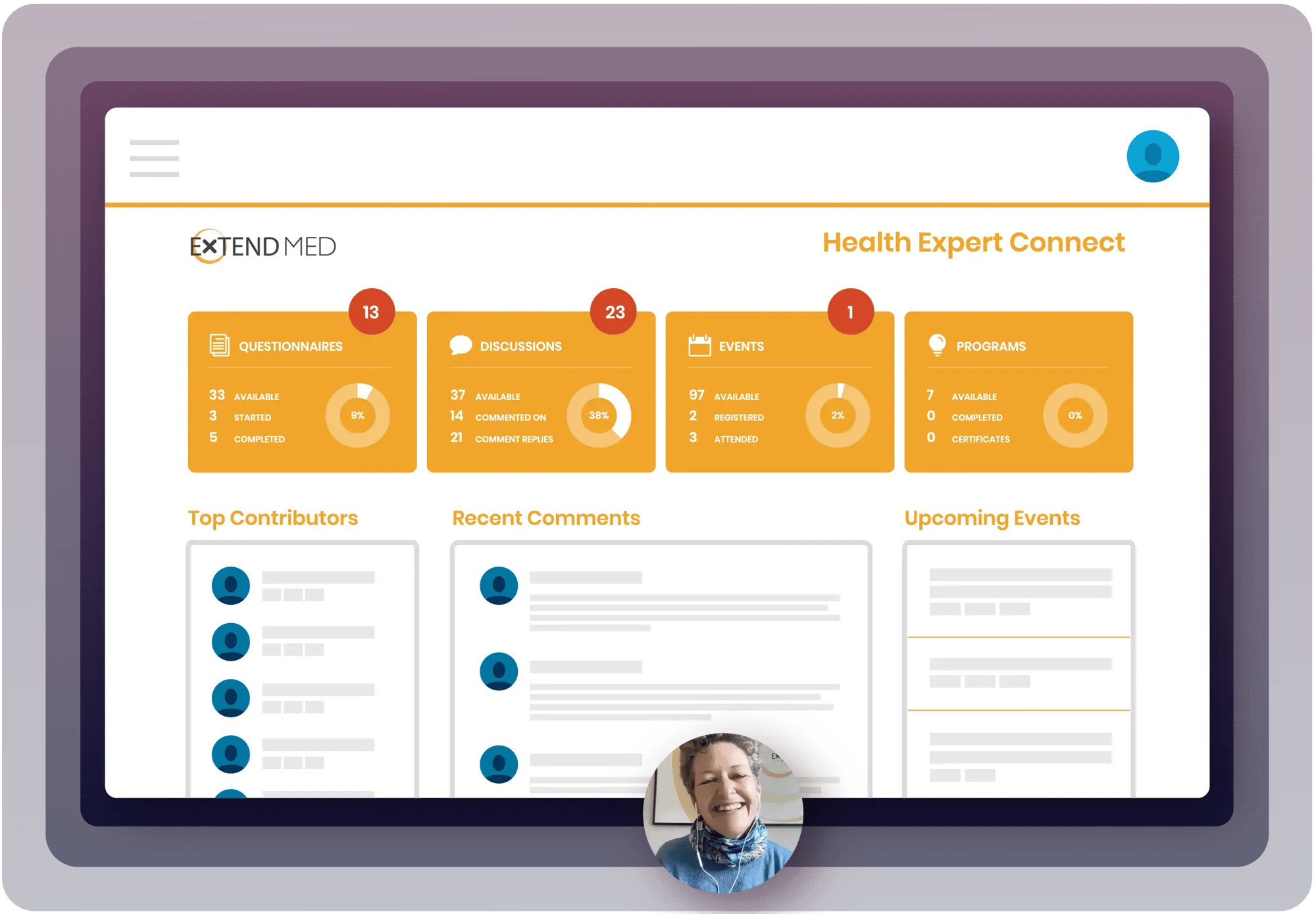
Our agency partnership model is straightforward, but it's worth walking through the specifics. When a medical communications agency partners with ExtendMed, they license our Health Expert Connect™ platform as their engagement infrastructure.
The agency owns the client relationship completely.
- They run the programs.
- They manage the strategy.
- Their brand is what the pharma client sees.
We provide the technology, the compliance infrastructure, the training and the ongoing support underneath. It’s not a referral arrangement or a reseller model. Both teams operate as extensions of each other.
What the agency gets:
- A single platform for the entire speaker program lifecycle. Field requests, approvals, venue selection, speaker contracting, training, attendee registration, NPI confirmation, expense reconciliation and Sunshine reporting all happen in one system. No more toggling between applications or reconciling data across platforms!
- Custom workflows aligned to the agency's own SOPs. Every agency operates differently and every pharma client has different requirements. The platform adapts to your processes, not the other way around. When one of our agency partners needed to customize how field reps submit requests, they worked with us to refine those forms until they matched exactly how their business operates. As they told us: "Those tweaks transformed how the field submits requests to us."
- White-labeled environments so the pharma client sees the agency's brand. Co-branded portals, white-labeled logins and shared dashboards keep you (the agency) in control while we handle the technology and compliance layer.
- Compliance guardrails built into every step. FMV rates, aggregate spend tracking, NPI validation and approval workflows are native to the platform. Business rules apply automatically. The budget builds itself the moment a request is submitted. The program manager sees YTD spend and can lock in speakers with one click. Compliance is finally part of the workflow from the start, not something layered on after the fact.
- Real-time reporting that proves ROI. Dashboards with charts and graphs that give the agency and its clients visibility into performance trends. “Agency A” put it this way: "The platform doesn't just offer raw data. ExtendMed helps us translate it into meaningful visuals, giving us easier visibility and deeper insights into performance trends."
- A dedicated team, not a help desk. Every agency partner gets a team at ExtendMed that knows their business by name. We suggest dashboard concepts, help agencies build forecasted-versus-actual savings analyses and think alongside them about how to demonstrate value to their pharma clients. We don't wait for support tickets.
In short, your agency licenses Health Expert Connect™ as your speaker bureau infrastructure. We provide the technology, training and ongoing support. You maintain complete control of client relationships and program execution.
This model works for independent agencies and mid-sized firms managing anywhere from 50 to 1,000+ programs annually who need sophisticated technology without building internal capabilities.
What Changes When You Have Proper Engagement Infrastructure
I want to be specific about the operational differences we've seen when agencies move from patchwork tools to a centralized platform. I’ll outline each result we typically see one by one.
New staff onboard in days, not weeks
When the platform is itself a built-in SOP guide with structured step-by-step approval workflows and compliance guardrails at every stage, new team members can be productive almost immediately.
One of our partners shifted from task-based tracking to actual approval workflows and saw an immediate impact on consistency and training time. Their Senior Director told us: "Having our meeting planners follow a structured step-by-step process ensures consistency and reduces the risk of missed steps."
If you manage high program volumes with a lean team, this matters so much. The platform becomes the institutional knowledge, not the person who's been there the longest.
The field force actually uses the system!
This one is under appreciated but important. When reps can build a compliant program request in four guided steps—choose a topic and slide deck, pick a date with lead-time enforcement, select a venue through integrated Google Maps and request a speaker filtered by distance and eligibility—they actually use the system. They don't email the program manager or try to go around the process.
One agency leader described how the integrated maps feature shifted accountability directly to the field: "Having the reps feel accountable in selecting the venue they want has been instrumental." When reps own their piece of the process, the entire workflow tightens up. You get better data, fewer exceptions and way less firefighting.
Managers shift from logistics to strategy
When the platform handles the operational flow, program managers stop spending their days chasing approvals and reconciling expenses. They can focus on high-value oversight:
- Compliance checks against budgets
- Operational efficiency across hundreds of programs
- Strategic conversations with clients about what the data is telling them
This is the shift from managing programs to managing a business. It's what lets agencies scale without proportionally scaling headcount.
You can confidently pursue bigger opportunities
This one often matters the most and I've watched it play out directly.
One of our agency partners was in a pitch with a major pharmaceutical company. The pharma company wanted to know if the agency's technology could handle the scale of a nationwide speaker bureau. There was some healthy skepticism. The agency's expertise wasn't in question; their infrastructure was.
Having us join the pitch as technology partners—not just vendors, but experts who could walk the client through the platform and build confidence in its capabilities—made the difference. They closed what became a significant multi-year engagement.
Their VP told us: "With pharma clients, the platform is always the hub. Having a partner like ExtendMed who can join calls, walk clients through it and build confidence in the portal goes a long way."
That's the value proposition in one sentence. We don't compete with your agency. We make your agency more competitive.
"Strategic Partner" Isn't Just a Label
I know every vendor calls themselves a "strategic partner." So let me be concrete about what that means in our agency relationships.
- We suggest ideas for your business before you ask. We often see patterns in how agency teams use the platform and recommend new dashboard views, reporting formats or workflow refinements.
- We're available to join calls with your pharma clients. When an agency introduces us, they usually don't say "our software vendor." They say "ExtendMed, our technology partner and experts." We have a seat at the table because we can augment agency expertise with engagement infrastructure expertise.
- When you bring us a "crazy idea," we don't shut it down. One partner's VP told us: "Even if we bring a crazy idea their way, they're always going to look into it and make sure that we can do it or not. It's great to have a partner that won't shut down something we want to try."
- The relationship runs both ways. You push us to innovate. We push you to think bigger about what's possible. When both teams are invested in each other's success, the work is different from a traditional vendor dynamic.
As that same VP put it: "The collaboration is key. We don't see ExtendMed, and I don't think they see us as just the logistical partner. We see each other as strategic partners."
Beyond Speaker Programs: Where This Goes Next
Speaker bureau management is where most of our agency partnerships start, because that's where the operational pain is most acute and the ROI is most immediate. But the platform does more than speaker programs!
The agencies we work with are already expanding into adjacent engagement types on the same infrastructure: booking congress interviews, managing advisory boards, sharing itineraries, tracking FMV rates across boards. Every new capability layers onto the same platform, the same data model and the same team relationship.
One of our partners framed the opportunity this way: if they implemented Health Expert Connect™ across all their engagement services, the value would compound at very little additional cost. The returns would go well beyond the initial speaker program investment.
This is the "engagement infrastructure" concept in practice. You're not buying a speaker management tool. You're building a foundation that supports every engagement type your agency offers, now and going forward.
- Advisory boards with synchronous and asynchronous formats.
- Congress strategies with centralized scheduling and follow-up.
- Stakeholder research with discussion forums and survey deployment.
Two ways to partner: You can license the platform and run it independently with our training and support. Or you can engage our team selectively for additional help with client pitches, custom workflow design, advanced reporting or capacity during peak periods.
Both models keep your agency in complete control.
Who This Is For (and Who It's Not)
I want to be honest about fit, because not every agency needs this.
This is for agencies managing or planning to manage 50+ speaker programs annually that want to professionalize the technology layer without building it themselves. It's for agencies whose pharma clients are asking harder questions about compliance tracking, reporting capabilities and data security. It's for agencies where the tools have become the bottleneck.
This probably isn't the right fit if you're running a handful of programs a year and a spreadsheet handles it fine. We're not trying to over-engineer simple workflows. But if you've reached the point where your team spends more time managing the tools than managing the programs, that's the signal.
The sweet spot we see most often: independent agencies and mid-sized firms managing programs across multiple pharma clients who need strong technology without the complexity or cost of building it in-house. Too big for spreadsheets. Too lean to build proprietary platforms. That's where we fit.
The Bottom Line for Agency Leaders
The agencies scaling fastest in 2026 have figured out a simple principle: license the infrastructure, own the relationships.
Partner with a technology team that operates as an extension of your business. Build on a platform that handles compliance, logistics and reporting natively so your team can focus on the work that actually differentiates you.
Let's Explore What a Partnership Looks Like
If your agency manages speaker programs and wants to scale without building a technology team, we should have a practical conversation.
We'll walk you through the platform, show you how our agency partnerships work in practice and help you evaluate whether the model fits your business. No pressure. No long-term commitment to get started. Many of our partners began with a single client pilot and scaled from there.