

If your time is short:
Your advisory board's job is to get specific, actionable insights from the right experts at the right moment in a program's development.
The technology you use to plan, run and distribute learnings from that engagement determines how many insights you actually capture, how clean your compliance documentation is when it's over and whether each advisor relationship extends beyond the session.
After years of running these for pharma teams, I keep coming back to three questions that separate teams who get real strategic value from their advisory boards from teams who just keep running them. This guide explores them.
The purpose of an advisory board hasn't changed over the years, but the operational bar definitely has.
Compliance scrutiny on FMV documentation, advisor credentialing and Sunshine reporting is tighter than it was even three years ago. Busy specialists have less tolerance for awkward joint experiences.
Finance and procurement want to see advisor engagement data that justifies the budget. The teams that are still running advisory boards on Zoom plus three spreadsheets are quietly burning hours every cycle that they could spend on the strategic work.
The technology has caught up. The teams getting the most out of their programs in 2026 and planning bigger for 2027 are the ones that picked the right operating system early and built their engagement model on top of it.
Three questions will tell you whether yours is the right one.
Do You Need an All-in-One Platform, or Will a Tech Stack Do?
Most teams running virtual advisory boards today are using some kind of stack of technology.
- A general-purpose video tool for the live meetings.
- A separate file-sharing system for pre-reads.
- A contracts platform for paperwork.
- A spreadsheet for tracking attendance and honoraria.
- A survey tool bolted onto the side.
Maybe the team has even gotten pretty good at running the seams between them. The honest question you have to ask though: what is that fragmentation costing you?
The hidden costs show up in three places.
- Insights get lost in the transitions between tools or require manual consolidation that nobody has time for.
- Compliance gaps open up at every manual handoff, especially around FMV documentation, training tracking and Sunshine-ready spend data.
- And the strategic time your team should be spending on engagement design gets eaten by logistics coordination.
An advisory board platform that handles the full lifecycle (contracting, profiling, pre-reads, live sessions, async discussions, surveys, expense tracking, reporting) in one system doesn't just save time. It changes what you can do strategically. When the data lives in one place, you can run a multi-touch engagement model that a stack simply can't support without breaking something.
If you're running fewer than three advisory boards a year and your existing stack works, you may not need to change anything. If you're running more than that, or if you're trying to move beyond simple half-day live meetings into more sophisticated engagement formats, a stack will hold you back.
What an all-in-one looks like:
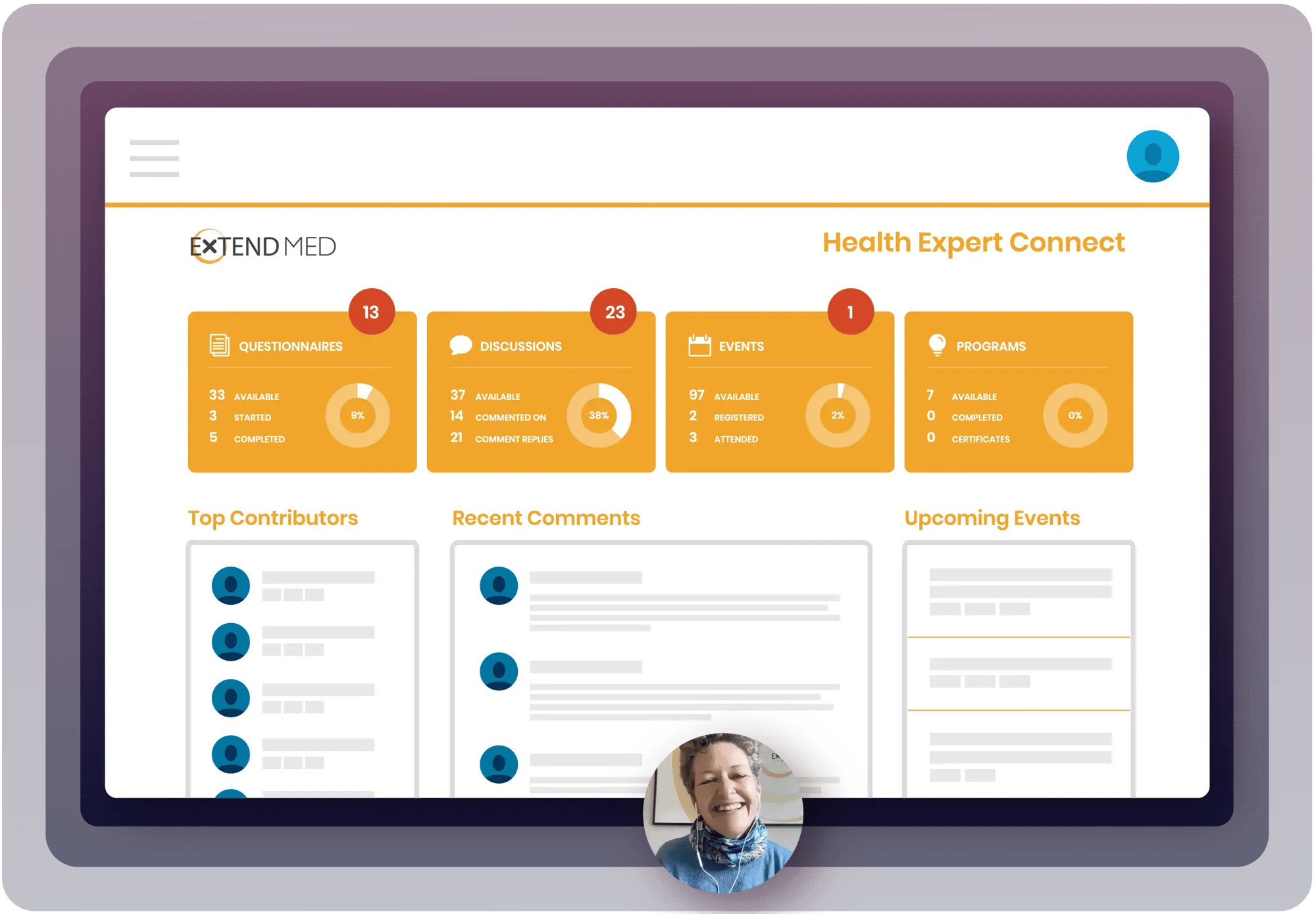
Health Expert Connect™ runs the full advisory board lifecycle in one system.
-
Advisor profiling with NPI validation and FMV documentation, including DocuSign-native contracting.
-
Synchronous video with polls, Q&A and recording.
-
Threaded asynchronous discussion boards.
-
Survey deployment.
-
Resource centers with access tracking.
-
Sunshine-ready reporting.
-
One login, which means one audit trail.
Synchronous, Asynchronous or Hybrid?
This is the question I'm asked a lot, and my honest answer is it depends on what you're trying to accomplish, but most teams default to synchronous when hybrid would serve them better.
Synchronous works when you need rapport and rapid consensus
Live sessions are excellent for the moments where you need humans to react to each other in real time. Building rapport at the start of a new advisor relationship, resenting complex clinical or commercial context, or driving toward consensus on well-defined questions where the back-and-forth is the point are great times to use live sessions.
The technology bar is higher than just a stable video connection.
-
You need polling that lets every advisor register an opinion at the same moment, not just the ones who speak up.
-
You need chat and Q&A as a lower-friction channel for quieter participants.
-
You need recording and archiving so nothing is lost to whatever your note-taker could catch in real time.
Asynchronous works when you need depth and breadth
Async discussions let advisors engage on their schedule. That matters for three reasons.
Busy specialists can participate when it actually works for them, without blocking a half-day. Advisors in different time zones can contribute equally. Complex clinical questions get considered responses when advisors have time to review the source material and build on what their peers have said before them.
The technology requirements are different from synchronous:
-
The platform needs moderated threaded discussion boards where advisors can respond to specific prompts, react to each other's comments and attach supporting materials.
-
Automated email and text reminders keep participation rates up across the discussion period.
-
Moderator tools let you post targeted follow-up questions, tag specific advisors and monitor engagement in real time.
There's an equity dimension worth naming here, as well. In a live meeting, a dominant voice can steer the room and effectively determine what the group concludes. Structured asynchronous input captures every advisor's view, including the ones who wouldn't push back in a group setting.
Hybrid usually wins
Most teams that try a structured hybrid model don't go back. We find that HCPs prefer hybrid meetings over in-person-only formats and prefer to meet two to four times per year using a mix of web meetings and virtual discussion forums over a two-to-three-week period. The data and the field both point the same direction.
Here's a model that works, which we call the "bookend."
-
Open with a live synchronous session where advisors meet, build rapport and align on the strategic context.
-
Shift to an asynchronous phase of two to three weeks where advisors respond to targeted discussion prompts on their own schedule.
-
Close with a second live session to synthesize and prioritize.
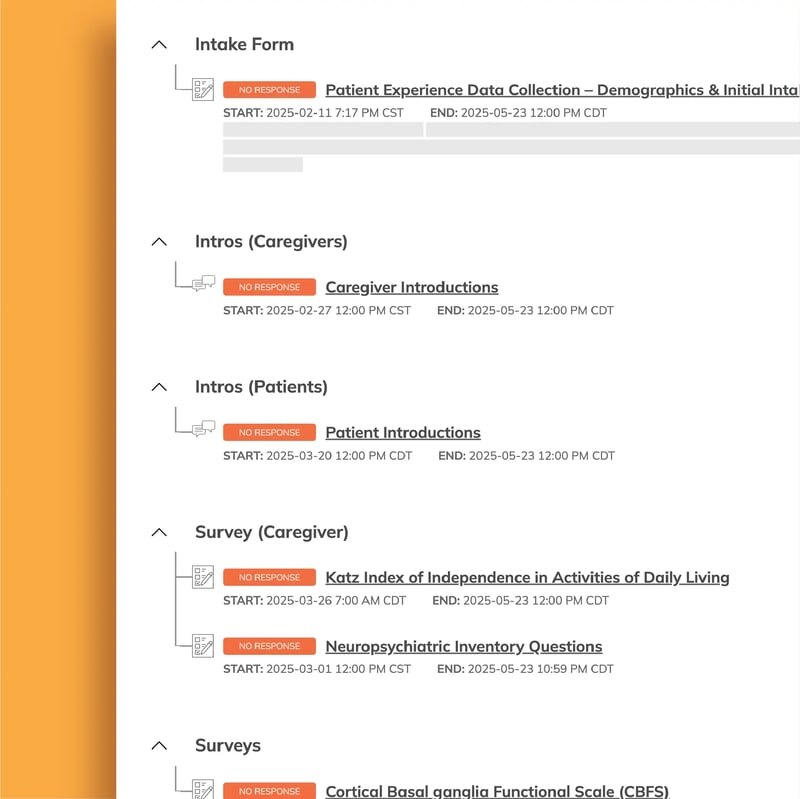
One of our biotech clients ran an interdisciplinary advisory board across three specialties using this format. Advisors averaged more than five hours of total participation each. Top contributors posted upwards of 25 individual comments across the discussion threads. That depth of engagement doesn't happen in a half-day meeting. The bookend works because it asks less of advisors' time overall while producing more, and every moment of engagement is purposeful.
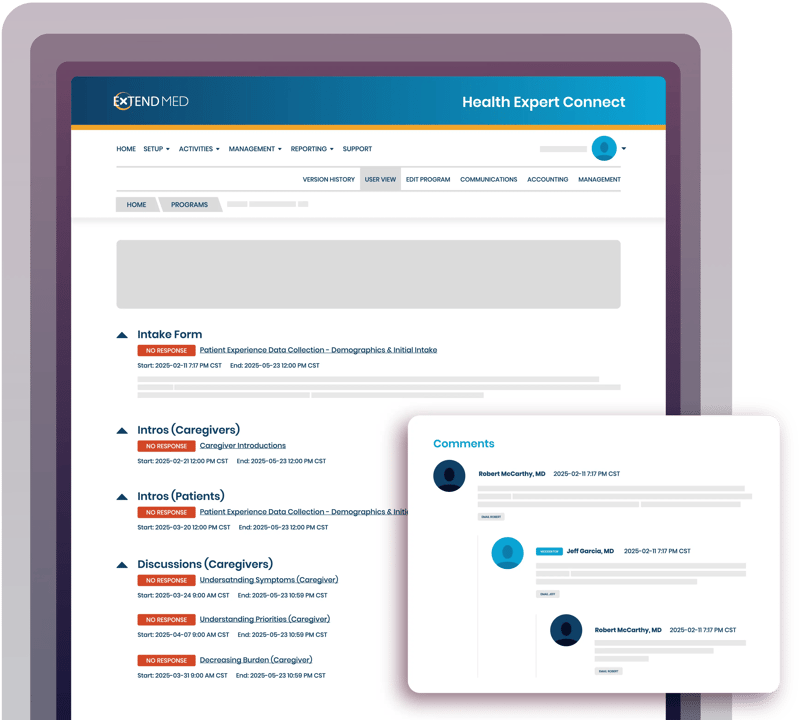
Health Expert Connect™ supports the full hybrid model:
Synchronous video with polls, Q&A and recording for the live sessions. Threaded discussion boards with attachments, follow-up prompts and engagement tracking for the async phase. Everything using the same advisor roster, the same data model, and the same audit trail!
Health Expert Connect™ supports the full hybrid model:
Synchronous video with polls, Q&A and recording for the live sessions. Threaded discussion boards with attachments, follow-up prompts and engagement tracking for the async phase. Everything using the same advisor roster, the same data model, and the same audit trail!
What Else Do You Need the Platform to Do?
Once you've decided on format, the next question is what other capabilities you need. The list below isn't exhaustive but covers the ones that most often separate platforms that work from platforms that almost work.
- The first is advisor records that hold up to compliance review: bios, credentials, licensing data, disclosures and CVs in a searchable format; NPI lookup and validation so licensing data and practice state are accurate for reporting; contract screens that capture billing maximums, term dates, FMV hourly and travel rates; and W-9 addresses. This is the infrastructure that generic tools don't provide, and the gap is what shows up in audits.
- The second is resource centers with access tracking: a secure place for advisors to access presentations, clinical summaries, publications and recorded sessions before and during the engagement. The platform should track who has accessed which materials so you know before the discussion begins which advisors have reviewed the pre-reads and which need a reminder. Permissions should allow review without download or external sharing, which preserves the confidentiality advisors are signing on for.
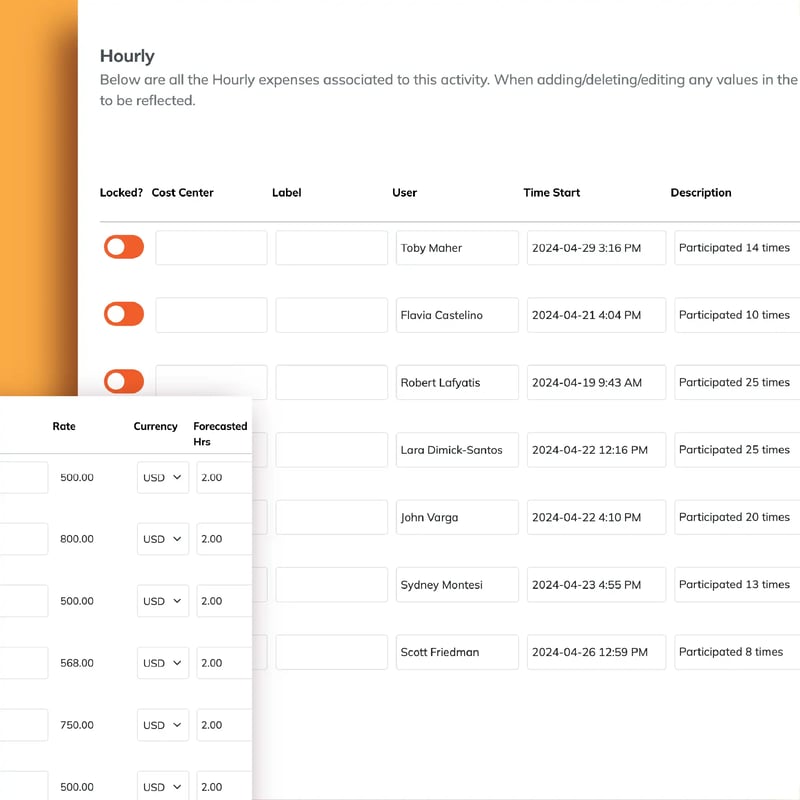
- The third, and the one that most clearly separates real advisory board platforms from general meeting tools, is FMV-compliant payment tracking and Sunshine reporting. The platform should track timesheet entries by advisor with rates, hours and documentation attached. It should support fixed and group expenses alongside individual honoraria. It should generate Sunshine-ready data automatically. When payment tracking lives in the same system as the engagement, the audit trail is complete. When it lives in a spreadsheet on someone's desktop, gaps open up.
- Fourth, insight reporting that helps you synthesize. After the engagement closes, you need to analyze what was said. The right platform offers built-in reporting: opinion, expertise, passion and sentiment indexes across the advisor panel; participation stats per activity; key contributions within discussion threads; engagement frequency per advisor over time. When the data lives in one system across boards, surveys and discussions, you can analyze it in aggregate. When it's in three different tools, you'll reconcile spreadsheets for two weeks and then make decisions with stale data.
- Finally, integration with the rest of your stack. Advisory board data shouldn't sit in a silo. The platform should connect to the systems your team uses for CRM, expense management and compliance reporting so insights feed your broader expert strategy rather than living in a separate tool.
What Health Expert Connect™ handles natively:
- Advisor records with NPI validation.
- DocuSign-native contracting.
- Resource centers with access tracking and download/share controls.
- Timesheet entry against FMV rates.
- Honoraria management with billing maximums.
- Aggregate spend ready for Sunshine reporting at any moment.
Opinion, expertise and sentiment dashboards built into the reporting layer.
What to Ask When You're Evaluating Advisory Board Platforms
If your team is actively comparing options, these are the questions that surface the differences that matter.
- Does the platform support both synchronous and asynchronous formats from one login, or does running both require stitching together separate tools?
- Is FMV documentation and Sunshine reporting built into the platform, or does compliance require exporting data elsewhere?
- Does the platform include NPI lookup and validation?
- Can it integrate with your existing systems?
- Is the interface intuitive enough that busy advisors can engage without IT support?
And the question that gets too little weight: what does the service model look like? Is there a dedicated program manager providing strategic guidance, or is it self-serve platform access?
The technology creates the conditions for a good engagement. The judgment behind the program design (the calls about format, moderation strategy, advisor preparation and discussion structure) determines what happens within those conditions. A platform that comes with a strategic partner is a different product than a platform with a help desk. Some teams want one. Some want the other. Both are valid. Just know which you're buying!
Every client of ours gets a dedicated program manager who knows your therapy area and your business. We are improving the platform from your suggestions and our research. We suggest dashboard concepts and engagement formats before you ask. That's the service layer behind the software.
The Real Point of an Advisory Board
The teams getting the most strategic value from their advisory boards in 2026 worked out how to make the operational layer disappear, so the strategic work could be the focus. Biggest budgets and largest expert networks help, but they're not what separates the teams getting real insight from the teams just running programs.
The right platform handles the logistics, the compliance and the data. With those off your team's plate, you have more options for how to engage, more frequency at lower per-engagement cost and more capacity for the work that an advisory board is actually for: asking the right questions, listening carefully and translating what your advisors know into decisions that move your program forward.
Want to See What This Looks Like in Practice?
If you're evaluating advisory board platforms or rethinking how you run them, let's talk. We'll walk you through Health Expert Connect™, show you how the bookend and other engagement models work in practice and help you figure out whether a licensed or fully managed model fits your team.