Market access teams face mounting pressure from every direction. Payers scrutinize pharmaceutical pricing with rigor while formulary committees demand increasingly sophisticated evidence packages. For pharmaceutical companies preparing to launch new products, getting pricing wrong carries severe consequences—delayed market access, revenue shortfalls and reduced patient access to life-changing treatments.
Without comprehensive stakeholder input, your product may face inappropriate pricing, limited insurance coverage or significant barriers to adoption. Yet gathering meaningful insights from decision-makers who control formulary access has historically been expensive, time-consuming and logistically complex.
Virtual stakeholder focus groups offer a solution. When designed and executed strategically, these engagements provide the critical intelligence needed to develop pricing strategies that resonate with payers and achieve formulary inclusion. This guide outlines a step-by-step framework for informing your commercial strategy and positioning your product for market success.
Why traditional market access research falls short
Pharmaceutical companies have traditionally relied on in-person advisory boards held once or twice yearly with physician key opinion leaders. This model fails to meet today's complex payer landscape demands.
In-person meetings require lead times of up to six months, making it impossible to address urgent questions as they arise. Geographic limitations restrict participation to those willing to travel, excluding valuable perspectives from regional payers or community practitioners.
Most critically, traditional approaches focus too narrowly on physician KOLs while overlooking the broader network of stakeholders who make coverage and reimbursement decisions. Payers, pharmacy benefit managers, hospital administrators and health economists all play crucial roles in formulary access, yet their voices are frequently absent from early market research.
The result is fragmentation. Each advisory board generates isolated insights in disconnected spreadsheets and email chains, making it nearly impossible to build cohesive value propositions or make confident pricing decisions.
The strategic value of stakeholder focus groups for pricing and market access
Stakeholder focus groups provide direct access to payer decision-makers throughout your product development journey. When executed properly, these engagements deliver unbiased feedback on treatment gaps, enable real-time validation of pricing assumptions and generate evidence to support reimbursement negotiations.
Success depends on engaging the right mix of stakeholders: major payer organizations like Blue Cross Blue Shield, Medicaid and Medicare; pharmacy benefit managers; hospital administrators and P&T committee members; health economists; specialty pharmacy directors; and healthcare providers who influence treatment decisions.
Timing matters significantly. The optimal time to begin stakeholder engagement is approximately 12-18 months before anticipated FDA approval—when you're building sales teams and expanding medical science liaison networks, making it a natural inflection point to establish systematic stakeholder relationships.
Step-by-step framework for stakeholder focus groups
First phase: strategic planning and objective setting
Before conducting your first focus group, invest time in strategic planning.
1. Start by defining clear research objectives.
Ask yourself:
-
What specific pricing questions need answers?
-
Which formulary barriers require investigation?
-
What elements of your value proposition need validation?
2. Establish measurable success metrics.
This can include:
- Number of diverse stakeholder engagements
- Quality of insights gathered
- Impact on pricing strategy decisions
- Time to formulary inclusion milestones
3. Build your stakeholder communities thoughtfully.
Start by establishing three to five core stakeholder groups—payers, healthcare providers, hospital administrators and specialty pharmacy representatives. 10 to 25 participants in each community is ideal to create trusted groups you can engage consistently over time.
4. Plan for quarterly touchpoints rather than one-off engagements.
Many pharmaceutical companies establish 12-month contracts with stakeholder communities, streamlining administrative logistics and signaling commitment to ongoing dialogue.
5. Platform selection deserves careful consideration.
Look for technology offering centralized stakeholder management, built-in compliance and Sunshine Act support, multiple engagement modalities and seamless integration with existing systems.
Second phase: design and execution.
1. Initial surveys
Begin by conducting initial surveys to collect anonymized baseline data on current treatment options, market gaps and pricing sensitivities. Blinded research approaches ensure unbiased feedback. Allow time for adequate response rates.
2. Facilitate in-depth virtual focus group meetings with stakeholders per session in virtual meetings.
Structure your discussion guide to probe:
- Current treatment landscape and unmet needs
- Value drivers influencing formulary decisions
- Price point sensitivity
- Clinical and economic evidence requirements
- Competitive positioning
3. Leverage multiple engagement modalities based on stakeholder preferences.
For example, synchronous live meetings are a great way to introduce everyone and break the ice, while asynchronous discussion boards or materials shared on-demand can allow busy stakeholders to participate when they have time, eliminating the hassle of juggling time-zones and various schedules. This can also encourage less confident or introverted participants to contribute without getting overpowered by more talkative experts. Meanwhile, tools such as polls help gather quantitative data.
4. Strengthen insights through diversity.
Virtual stakeholder groups mean you aren’t limited by participants’ ability to show up physically. As a result, you have the opportunity to mix geographic regions, national and regional payers, large health systems and community practices, and both medical and pharmacy directors.
5. Take advantage of more frequent engagements.
One of the significant advantages of ongoing stakeholder engagement is the ability to connect dots between sessions over time: Track how stakeholder perspectives evolve as they gain familiarity with your product and therapeutic area. Then, allow themes emerging from each session to inform the agenda for subsequent engagements. This iterative approach builds a longitudinal view of stakeholder priorities and creates opportunities for progressively deeper dialogue.
6. Leverage best practices.
To host a productive discussion,
- Leverage experienced moderators who understand payer decision-making
- Provide adequate time for open-ended discussion
- Record and transcribe each session to make it easier to review later
- Provide targeted follow-up questions to probe deeper into interesting topics as they come up; planned or unplanned
Third phase: analysis and application
Systematically analyze insights by synthesizing across all stakeholder engagements. Now that you’ve gathered feedback from various engagements, it’s time to bring them all together to identify common themes, areas of consensus and points of divergence requiring segment-specific strategies. Maintain a centralized repository of insights that your entire market access team can reference as strategy develops.
Next, translate your research into strategy across four domains:
-
Pricing strategy: Identify price points balancing commercial viability with payer acceptance based on stakeholder-validated value drivers.
-
Value proposition: Address stakeholder-identified gaps with messaging demonstrating how your product fills treatment landscape holes at competitive costs.
-
Formulary strategy: Understand evidence requirements across payer segments and develop proactive mitigation strategies for anticipated coverage barriers.
-
Evidence packages: Compile stakeholder testimonials, document unmet needs from multiple perspectives, build FDA submission cases incorporating real-world applicability and develop payer-specific value dossiers.
Measure ROI through time saved in planning, reduced formulary rejection rates, speed to market access milestones and stakeholder engagement quality metrics.
Common Pitfalls to Avoid
Don’t fall prey to these easy mistakes:
-
Waiting too long: Starting stakeholder engagement only months before launch leaves insufficient time to incorporate insights. Begin approximately one year before anticipated FDA approval.
-
Limited stakeholder diversity: Engaging only physician KOLs while overlooking payers, pharmacy benefit managers and hospital administrators creates blind spots. Prescribers and reimbursement decision-makers are often different stakeholders.
-
One-time events: Treating focus groups as isolated engagements squanders the opportunity for deeper dialogue. The most valuable insights emerge as stakeholders become comfortable sharing candid perspectives over time.
-
Siloed insights: Keeping feedback from different stakeholder groups disconnected prevents seeing how various parts of the healthcare system interact and influence decisions.
-
Failure to integrate: Gathering extensive insights without applying them to strategy wastes time and resources. Establish clear processes for how focus group insights inform pricing, market access planning and value proposition development.
How ExtendMed’s platform supports market testing focus groups
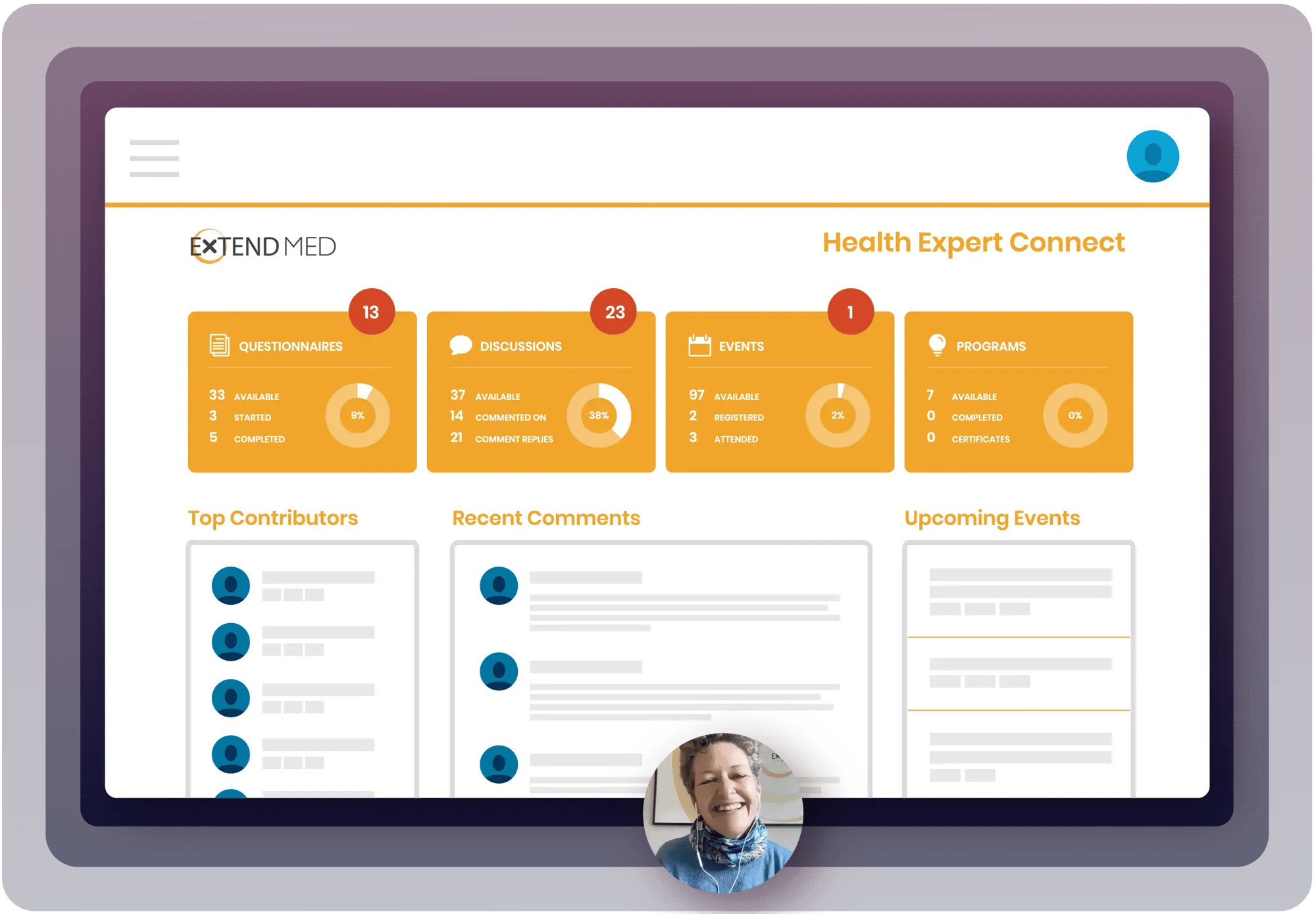
Health Expert Connect™ provides the capabilities commercial and market access teams need to conduct sophisticated stakeholder research that directly informs pricing strategies and formulary inclusion approaches.
-
Consolidate your multi-channel engagement to one platform: synchronous virtual meetings, asynchronous discussion boards, content libraries and more.
-
Launch anonymized surveys that gather feedback from payers and administrators about current treatment landscapes, unmet needs and coverage priorities.
-
Host frequent, cost-effective engagements: Gather more nuanced feedback and develop deeper relationships over time.
-
Leverage platform analysis and AI tools to compile insights across engagements.
ExtendMed client success story: first-in-class HCM therapy
A clinical-stage biopharmaceutical company and its medcom partner needed to build strategic intelligence around a first-in-class cardiac myosin inhibitor for obstructive HCM advancing toward Phase 3—simultaneously across three completely different stakeholder groups, at a price point appropriate for an early-stage company.
The team needed a single platform flexible enough to engage HCM patients, community cardiologists, and international investigators all at once, each requiring a different level of scientific depth, scheduling accommodation, and discussion format.
Using ExtendMed's Health Expert Connect™ platform, the company and its medcom partner launched a three-cohort advisory program combining asynchronous discussion forums with synchronous virtual sessions.
Key results:
- Investigator input directly shaped Phase 3 trial design, including primary endpoint selection and biomarker-driven patient stratification
- Community cardiologist insights initiated an HCM medical education program 18 months ahead of expected approval
- Patient engagement directly informed PRO instrument selection and patient support program design
- Several patient advisors joined the company's formal patient advisory council, growing it to 12 engaged voices
- Durable relationships built with leading HCM centers in the US and Europe ahead of Phase 3 site activation
- Large-pharma caliber, multi-stakeholder research delivered at a fraction of enterprise platform costs
Conclusion
Stakeholder focus groups, when designed strategically and executed consistently, provide the evidence-based insights needed to develop pricing strategies that resonate with payers and achieve formulary inclusion.
Success requires strategic planning, disciplined execution across multiple engagement modalities and systematic analysis that translates research into actionable strategy. The pharmaceutical companies that will thrive in an increasingly complex payer landscape ground their pricing and market access decisions in authentic stakeholder input. By implementing this framework, your team can navigate formulary challenges, optimize pricing strategy and deliver your innovation to the patients who need it most.
Health Expert Connect™ can help pharma teams carry out these best practices without the added administrative and financial burdens of in-person meetings plus the added benefits of a centralized, virtual platform that can host both live meetings and asynchronous discussions.
Request a demo to see how Health Expert Connect™ can help you gather better insights and launch with confidence.