
In case your time is short:
The speaker bureau programs pulling ahead in 2026 are consolidating scattered tools into a single platform.
They're automating compliance so it enforces itself, putting guided workflows directly in reps’ hands, encoding SOPs into the system instead of a binder, turning reporting into a real-time decision-making tool, giving speakers self-service hubs and choosing technology partners over technology vendors.
Every practice in this post is drawn from what we’re seeing work right now with our clients and agency partners—including one agency managing 700+ programs a year on our Health Expert Connect™ platform without scaling headcount.
Get an overview of our speaker program capabilities here:
ExtendMed's platform, Health Expert Connect, allows you to easily manage all the steps necessary for hosting a successful speaker program. Today, we will walk you through how we can support your events from multiple user perspectives, a representative, speaker, project manager, and attendee. Before we get started, I want to show you how the system is set up. Just a quick overview. From a setup perspective, we can brand the platform with your company's logo, program information, and branding for your product. We can set styles in terms of colors, add to the footer with your privacy policy copyright information, et cetera. Now let's go ahead and start as a representative. You can see I'm logged in here as Representative Carol Bailey, and I'd like to go ahead and add a new event. I have the ability to name my event. I'll just name this test event. 65, and it's going to be in Baton Rouge, where I live, and this is my territory. I'm going to choose from a topic. This topic corresponds to a slide deck, and I'm going to go ahead and make this event, schedule this event for a couple weeks out on February 20th, I'm going to start the event at 6 p. m. And I know that Tuesdays are a good day for my target HCPs, and I'm going to end the event two hours later at 8 p. m. So from here I'm going to make this event an onsite events. I'd like to have the speaker. Join us at a restaurant I'm estimating that there will be 8 attendees and I'd like to do this at men's tours on the boulevard in Baton Rouge. So all the address information is already stored and I can move on in this process. My next step is going to be to select a speaker. Here on this page, I can see the speakers who are eligible to speak on this particular deck, and I can go ahead and select from these options. Speaker Elizabeth Heiden is very close from a travel perspective. She is only two miles away from my restaurant venue. And in addition, she has high ratings. So I'm going to go ahead and choose Dr. Heiden for my speaking event. What I'd now like to do is to log in as a project manager just to give you an overview of the approval process. So while the representatives are able to, as we just demonstrated request a new event, request a speaker, request a venue select whether they're conducting a webcast event or an on site event, etc. The project managers are getting notified so that they can go through the approval process for all the events that are requested. So going back into the system now as a project manager, you can see in the top right corner here, I'm going to go ahead on my management tab and look at all the events that are needing approvals as this page comes up, you'll see that there are some events that that are already live. There are some events that are overdue, etc. So I can track the status of my events. I'd like to go in and show you what an event looks like. What approvals are needed for each event. So let's go through this particular event, which is coming up on February 6th and see what the approval status is. It looks like all the planning has been done, and this event has already moved to live status so that the representative can start recruiting. The speaker has confirmed availability and gotten an email to do so. We have turned on accounting, we have added any planning expenses, and so that you can see the venue details we can go to the specific venue information, and if I have any updates I need to make, I could add them here. There is an email associated with the event planner at the restaurant. The, name of the restaurant contact is stored, the phone number, etc. If I want to add any AV requirements, I can do so here. So all the venue details are already stored here, and I have that carried over because I've planned events previously at Mansurs. In terms of speaker, I can see that the speaker has also been approved. So, this event gives you an example. It is now ready for the representative to start recruiting. Going to go back in now as a representative, go to my test event 63 and start to invite some of my target HCPs to this event. So, here is event 63 to go to my event details. Go to my management page, and I can see that 5 people have been invited to date. 3 have registered and since the event hasn't occurred yet, no one has attended. If I want to go into this event and see all the people in my territory, I can see I have 109 targets in my territory, and I can show all those targets at once. But that's a lot of people to go through, so I think I want to filter this list a little more thoughtfully. I'm going to select all the people, and I've already done this, all the people who are a certain distance from the, the venue. So. If I want to start out, I'll uncheck this for a moment and we can check miles from from where they, their personal address is. So let's go ahead. We, we will wait for this to come up. I have this set currently to 25 miles radius from the, from the restaurant venue. And here we have a listing of people who are this distance, 25 miles or less from the venue. You can see that I can then also search by last name, sort this by last name and go through here. Let's go ahead and sort. By last name with this list and now we can go ahead and start to invite people. If I talk to for example Dr. Kuhlman and Dr. Kuhlman says, yes, I'd like to register, then great. I can click register. If I want to invite Dr. Littel and send an email invitation, I can click invite and Dr. Littel will receive an email invitation. Now I also have the option to print invitations and I can do that at the top of my page. So here is an invitation printout that includes a QR code so that the doctors can easily scan the QR code and register for the event. All of that takes place on my event management page and I have the ability to recruit from my list target list of 191 HCPs. I'd now like to go to this event as a speaker. So you can see that I'm logged in here as Dr. Heiden. I'm going to go under my activities and events. Again, I'm looking for event 63, so here is my event 63. And I have the ability on this page to be able to mark myself as being interested in attending, first of all. And then I also have the ability to download any slide decks that are associated with this event. So there are my slide decks. Just to give you an example of other materials that can be shared here. We can look at a, an older event from. Earlier in the year and see other details that are stored. For example, I believe this event from October 19th. I can see my audience is going to be community endocrinologists. I can download the deck and since this event has already ended, I can submit expenses. Typically expenses are only eligible to be submitted within a window of several days, so whether your policy is 72 hours or 5 business days, et cetera, we can build that into the system and send reminders to the speakers so that they submit their expenses on time, including receipts. I'd now like to show you what what this looks like to be able to register for an event from a healthcare provider's perspective. So let's go ahead and look at one of these events. This is an event coming up. I'm going to go in just for a moment here as the project manager to copy the link. That is associated with that QR code, and we are going to enter it just to see what this looks like from a health care providers perspective. So, they come to this page, there can be details about the event, maybe an image associated with the event, and then they can register entering all their information. Again, this page can be branded. This can be templatized so that every event has a specific slide deck and certain speakers can be included here. Here we link to the speaker bio and so there's other information available for the event. I'd now like to just mention that we also allow after the event in closeout, we can go to a specific event as a project manager. And when an event is ready for close out, let's choose an event that has happened in the past. We'll go to this particular event, 1470. And when in the closeout process, a thank you note goes out to all attendees. For having attended the event in addition, they have the opportunity via a QR code to schedule a follow up meeting with the sales representative. So what that looks like from a user scheduling perspective, we'll go into my user scheduler, just so you can see .They would get a link if they were scheduling a meeting with me to have an introductory meeting and that link shows my calendars real time availability so they can schedule a meeting directly with the sales representative at their convenience. This is a really nice feature and many of our sales representatives report positive results from this. So in that thank you note, they have a QR code to book time with the sales representative. They can complete an evaluation and they get a reminder to complete the evaluation if they have not done so within a two day period. Going back to close out, we'll go to a specific event to close out here. Again, let's go to this particular event. We can go through the approval steps. The event has already happened. So we need to confirm that the speaker spoke at this event. And the speaker gets an email, an automated email, once the event's time has expired. In other words, we've gone past the scheduled event time they get a notice saying, please confirm that you spoke at the event. In this case, I'm going to as the project manager, complete those details on behalf of the speaker. And there's an audit trail that I have done so, so here I'm taken to the event page and I can go to management and I can mark the appropriate people as having attended. So the speaker is Heiden. I'm going to go ahead and select Heiden here. And mark Speaker Heiden as having attended so she has attended the event. We need to enter the time. It was a 60 minute meeting. And so those details are stored and I can go back through the approval process. So I can now confirm the speaker. I can confirm the 7 attendees again with an audit trail, and if there are any speaker expenses, I can go to accounting and make sure to include those details. So we do have an honoraria here for Speaker Heiden because she's contracted for $500 for a local event. There is also a $250 expense associated with the private room rental and then a $1,000 group expense for food and beverage. So all of that is captured here. The total event cost with these expenses is $1,750 and that does get generated on a Sunshine report. Hopefully this gives you a quick overview of our system. If you do have any further questions, we would be glad to address them in a live demonstration. But this video gives you an overview of our system and how you could use it to support your speaker programs.
Learn more about Health Expert Connect™ for speaker bureau management.
I’ve spent more than 25 years building technology for life sciences stakeholder engagement. In all that time, I’ve never seen the speaker bureau landscape shift as fast as it has recently.
Compliance requirements are tightening. Budget scrutiny is intensifying. Field teams expect self-service tools that actually work. And agencies managing hundreds of programs simultaneously can’t afford to duct-tape five different platforms together and hope nothing falls through the cracks.
The companies running the tightest speaker programs right now are focusing on doing the fundamentals better than everyone else, and they’re doing them on systems that don’t fight them every step of the way.
Here’s what I see separating the best programs from the rest in 2026.
1. Retire the Patchwork
We still commonly talk to teams that are running speaker programs across four or five disconnected tools:
-
one for venue logistics
-
one for registration
-
another for evaluations
-
a spreadsheet for expense tracking
-
a filing cabinet’s worth of email threads holding the whole thing together.
This "works" when you were managing 50 programs a year. It doesn't work at 200. It definitely does not work at 700.
Bridget Beck at Citrus Health Group described this exact situation when her team first came to us for help scaling their programs. They had one tool for speaker and venue logistics and a separate one for program registration, plus additional applications for evaluations, email communications and data analysis.
They had to compromise their process to fit within the rigid framework of their old platform.
The fix here is straightforward:
Consolidate onto a single platform that handles the full speaker program lifecycle—from field requests and approvals through contracting, logistics, compliance and reporting.
When we built Health Expert Connect™, this was the core design principle.
Every stage of a speaker program lives in one system.
-
Field requests feed directly into approval workflows.
-
Approved events auto-generate budgets.
-
Speaker confirmations trigger attendee communications.
-
Close-out reconciliation flows into Sunshine-ready reporting.
Nothing gets lost between tools because there’s nothing between the tools.
Within 12 months of switching, Citrus went from struggling with system limitations to confidently managing over 700 programs annually without adding headcount.
Read our full case study with Citrus here.
2. Let Compliance Enforce Itself via Tooling
Here’s a truth that makes some compliance teams uncomfortable: if your compliance process depends on people remembering to follow it, it’s already broken—at best, it invites problems.
The best programs today don't rely on manual checks. They encode business rules directly into the system so that compliance happens automatically as a natural byproduct of doing the work.
In our Health Expert Connect platform for example, we use a no-code rules editor that turns each client’s internal policies into automated platform actions.
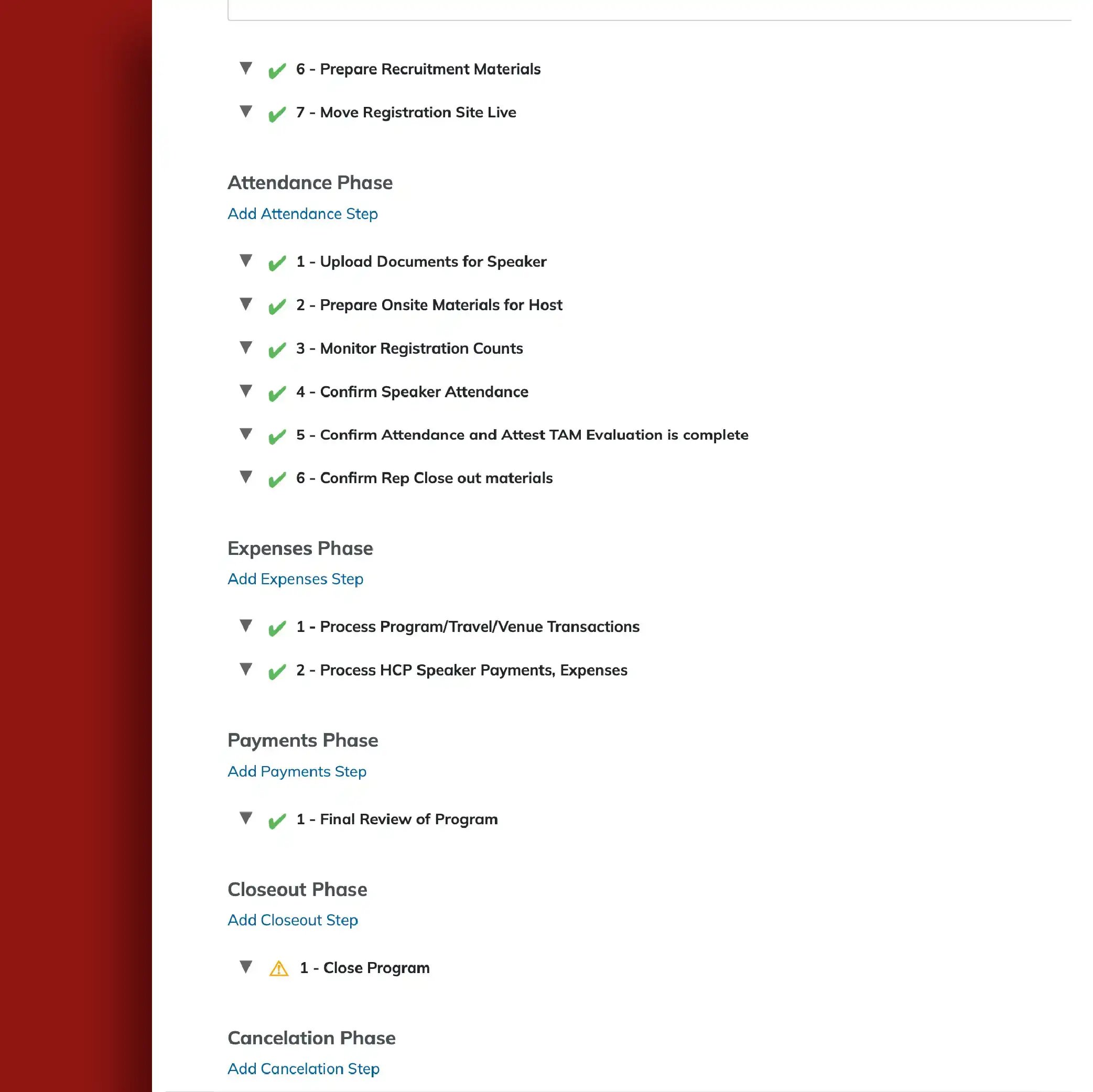
Fair market value rates are assigned the moment a speaker is confirmed. Budget lines auto-build when a request is submitted. NPI validation runs at registration. Honoraria, travel expenses, group meal costs and venue fees all get categorized and captured in real time, with every transfer-of-value data point exportable for Sunshine Act reporting.
Program managers see year-to-date spend the instant they open an event. They don’t have to go dig through a spreadsheet or chase down an accounting report. The platform surfaces it in context, right where the decision is being made.
This is especially critical for agencies managing programs across multiple pharma clients, each with their own compliance frameworks.
Citrus Health Group, for example, manages speaker programs spanning nutrition, heart failure, structural heart and diabetes care divisions—all for major pharma clients with highly distinct requirements. The platform adapts to each client’s specific business rules and workflows while maintaining the consistency and audit trails that compliance teams need.
3. Empower the Field, Don’t Bottleneck Them
If your reps have to email headquarters every time they want to book a speaker (which is very common), you’re creating a bottleneck that slows down engagement and frustrates the people closest to your customers. It's one of many problems teams have more or less become accustomed to and normalized because until recently, there weren't great technical solutions to it.
Now, the best programs put guided, guardrailed tools directly in the hands of field teams.
In Health Expert Connect, reps build a compliant program request in four steps:
-
They choose a certified slide deck and meeting format.
-
They select a date using a picker that enforces lead-time and local time zone requirements
-
They search for a venue via integrated Google Maps (capturing food and beverage and AV needs in one step)
-
Select a speaker from an auto-filtered list that shows distance and eligibility.
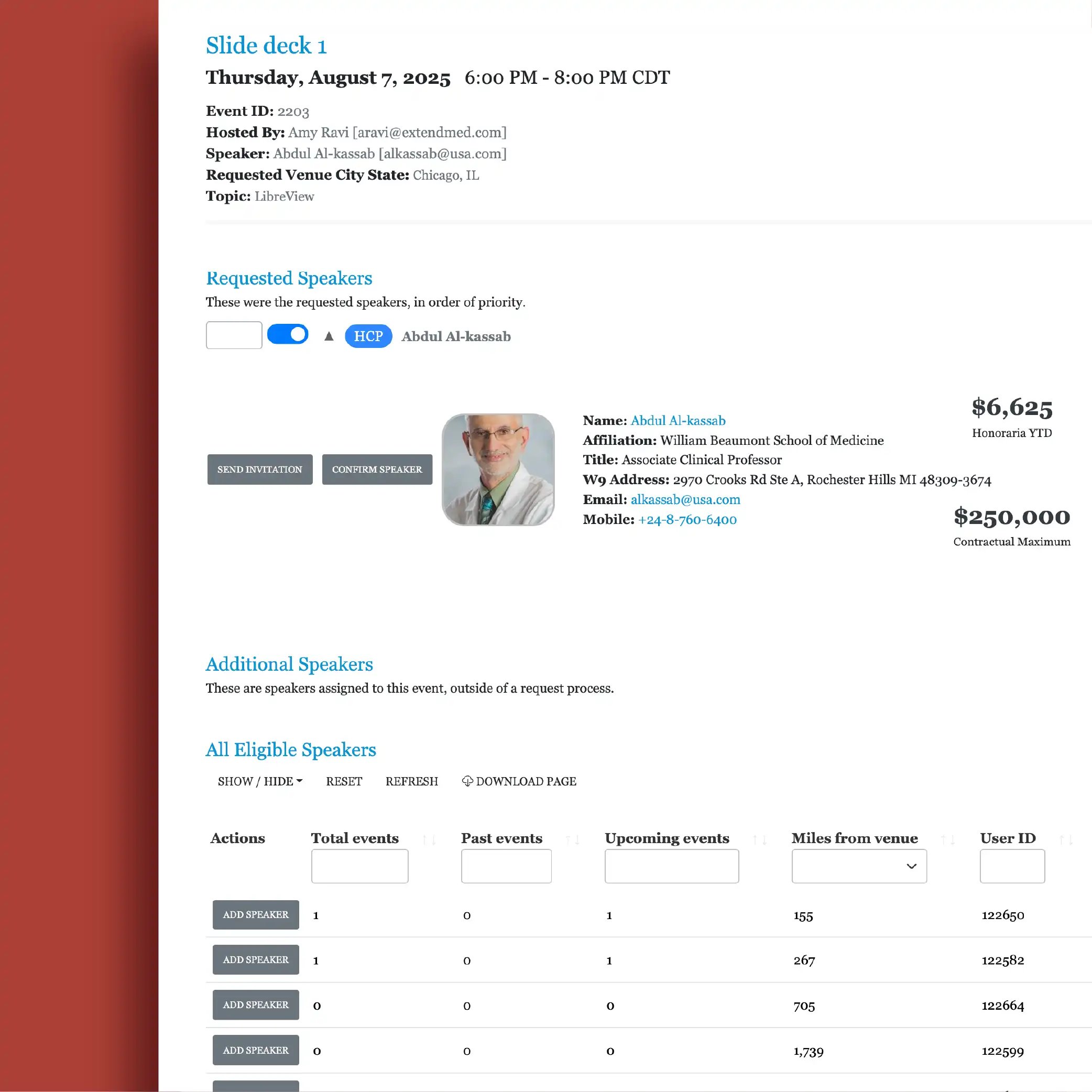
That last piece is so important. The rep doesn’t need to know who’s been contracted or who’s approaching their annual cap. The system already knows. It only surfaces speakers who are eligible for that event, in that territory, at that time.
Bridget’s team at Citrus saw an immediate impact here. By integrating Google Maps into the venue selection process, accountability shifted out of the corporate office and into the field. Reps now feel ownership over selecting the venue they want (and they provide the information the planning team actually needs) without back-and-forth emails.
The result is less time chasing down incomplete requests and more time focused on high-value oversight like compliance checks and budget reconciliation.
4. Build Your SOPs into the System, Not a Binder
One of the most underrated advantages of a well-built speaker bureau platform is how it shortens (or even collapses) the onboarding curve.
When your step-by-step process is encoded in the platform itself—as structured approval workflows with clear phases, assigned tasks and built-in validations—new hires don’t need to memorize a 40-page SOP manual. They follow the system. The system is the SOP.
Citrus Health Group experienced this firsthand. After implementing Health Expert Connect, their team shifted from informal task lists to structured approval workflows with actual phase-by-phase checklists.
-
New staff were onboarding in days instead of weeks, with the platform serving as a built-in guide.
-
Managers could track program status at a glance, flag outstanding tasks and confirm when programs were reconciled.
As Bridget described the shift, she had used task-based systems before, but the real breakthrough came from actual approvals—having meeting planners follow a structured step-by-step process that ensures consistency and reduces the risk of missed steps.
This matters enormously for scale. If your growth strategy depends on hiring more people and hoping they learn fast enough, you have a fragile operation. If your growth strategy depends on a system that teaches people how to work inside it, you have a scalable one.
5. Turn Reporting from a Chore into a Strategic Advantage
Most teams treat reporting as a necessary evil: something you do after the fact to prove you ran a program. The best programs are treating reporting as a real-time or near-real-time decision-making tool.
There’s a huge difference between compiling a spreadsheet of attendance figures at quarter-end and seeing a live dashboard that shows you which programs are driving the highest engagement, which speakers are consistently rated as most effective and where your per-event costs are trending relative to budget.
In Health Expert Connect, dashboards track spend, deliverability and workflow status in real time. You can drill into every budget line (venue costs, speaker travel, food and beverage) for any event.
A deliverability dashboard surfaces undelivered and failed email counts so you’re not sending invitations into a void. Phase-by-phase checklists log planning through close-out so you always know where each program stands.
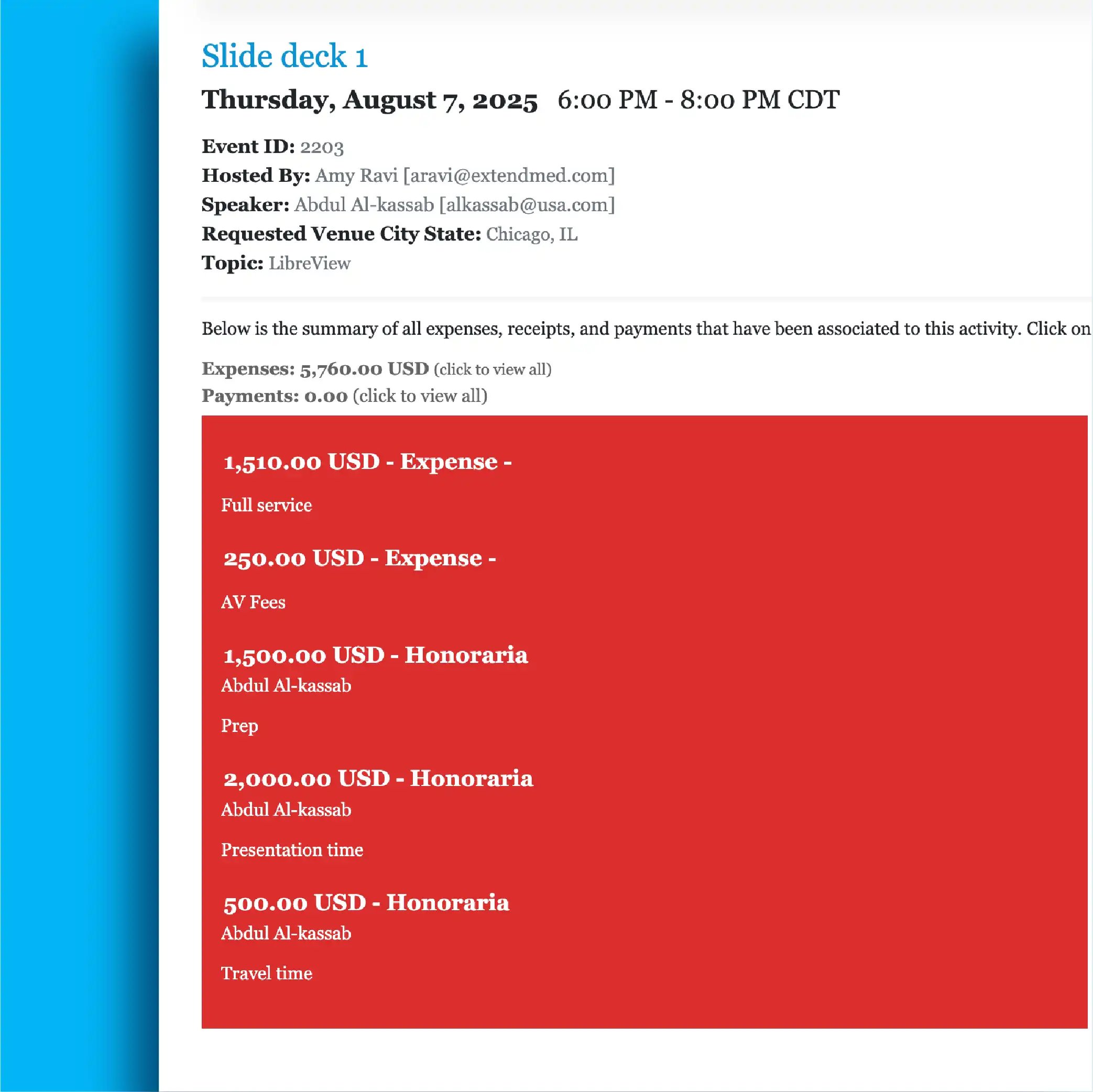
We also build operational intelligence into the platform to answer questions like:
-
Which programs are most engaging?
-
Do early registrants convert to attendees at higher rates?
-
Is it better to recruit attendees two days before a program or four days before?
These are the kinds of questions we’re helping clients answer so they can share best practices across their organizations about running programs more effectively.
Citrus Health Group used these reporting capabilities to shift from reactive tracking to proactive insight. As their team noted, the platform doesn’t just offer raw data—it translates information into meaningful visuals like charts and graphs that give them deeper visibility into performance trends. That capability has been essential for demonstrating ROI to their pharma clients and identifying operational efficiencies within their own team.
6. Give Speakers a Self-Service Hub They’ll Actually Use
Speakers are incredibly busy clinicians. They don’t want to dig through email threads for their contract terms or call someone to find out when their next engagement is. They want a single place where everything lives.
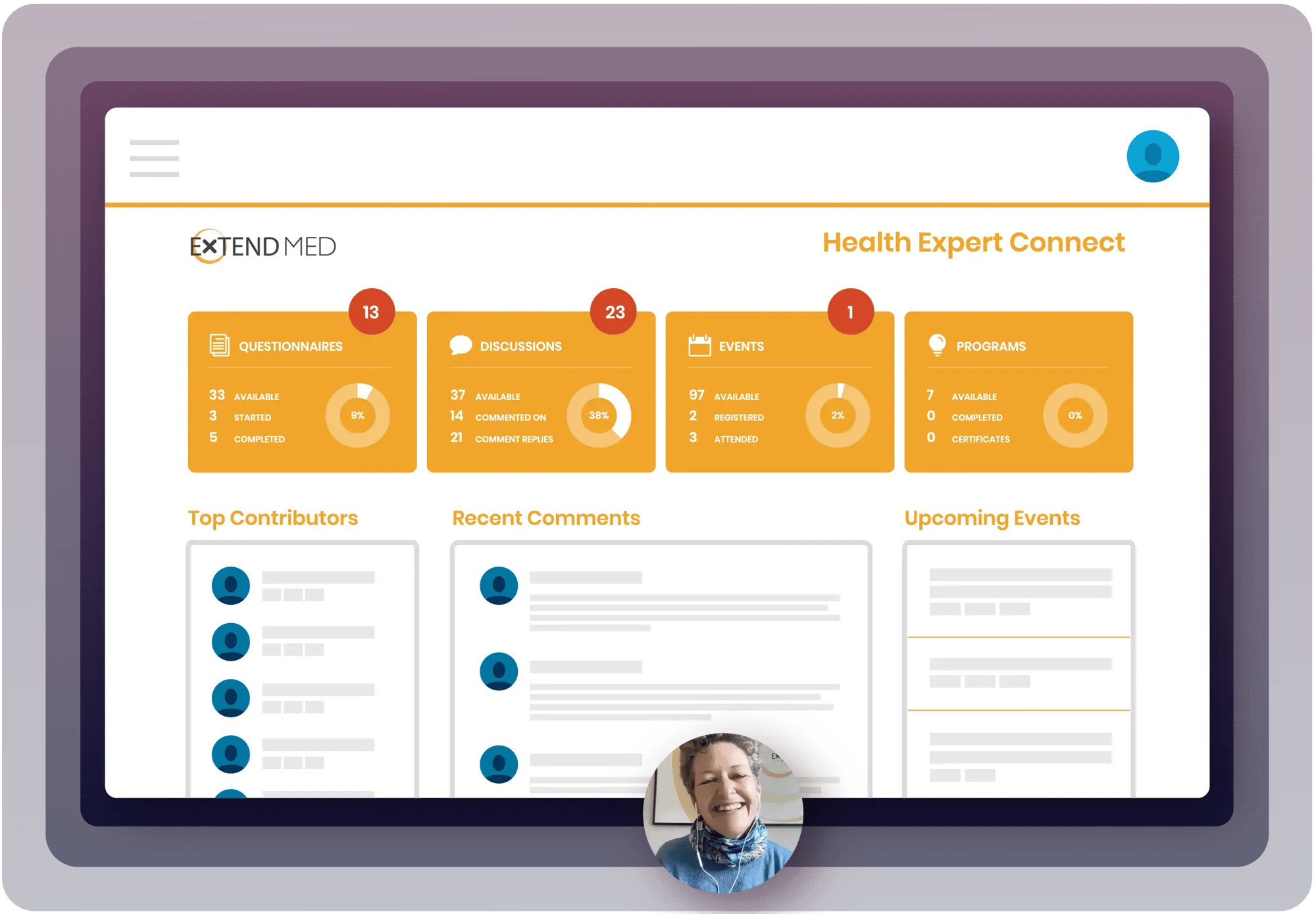
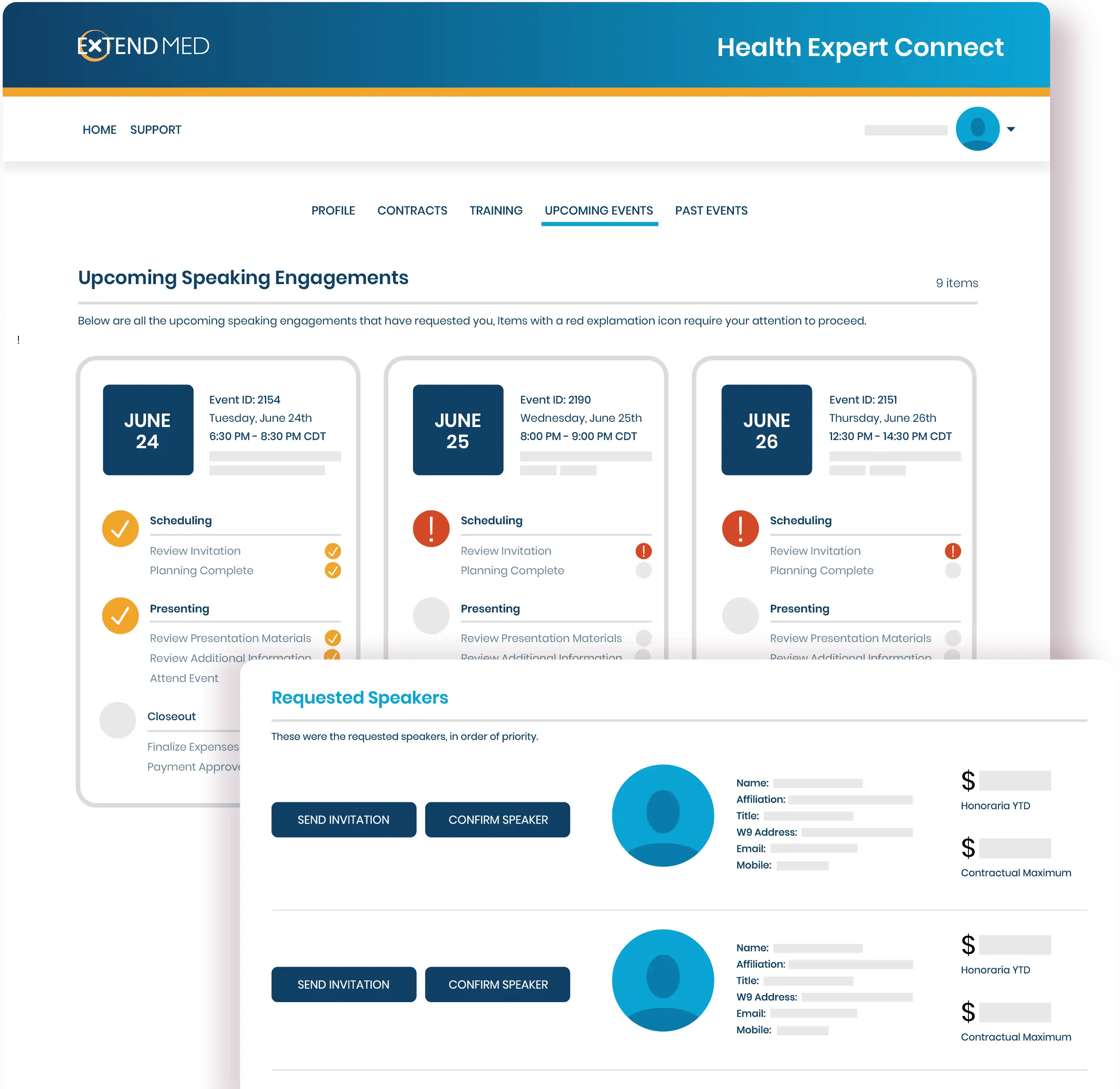
That's why we built Health Expert Connect to give every speaker a personalized dashboard where they can see their upcoming engagements and tasks at a glance, track deck-specific training status and renewals, view their contract terms and rates (including remaining annual cap) and submit receipts and confirm attendance.
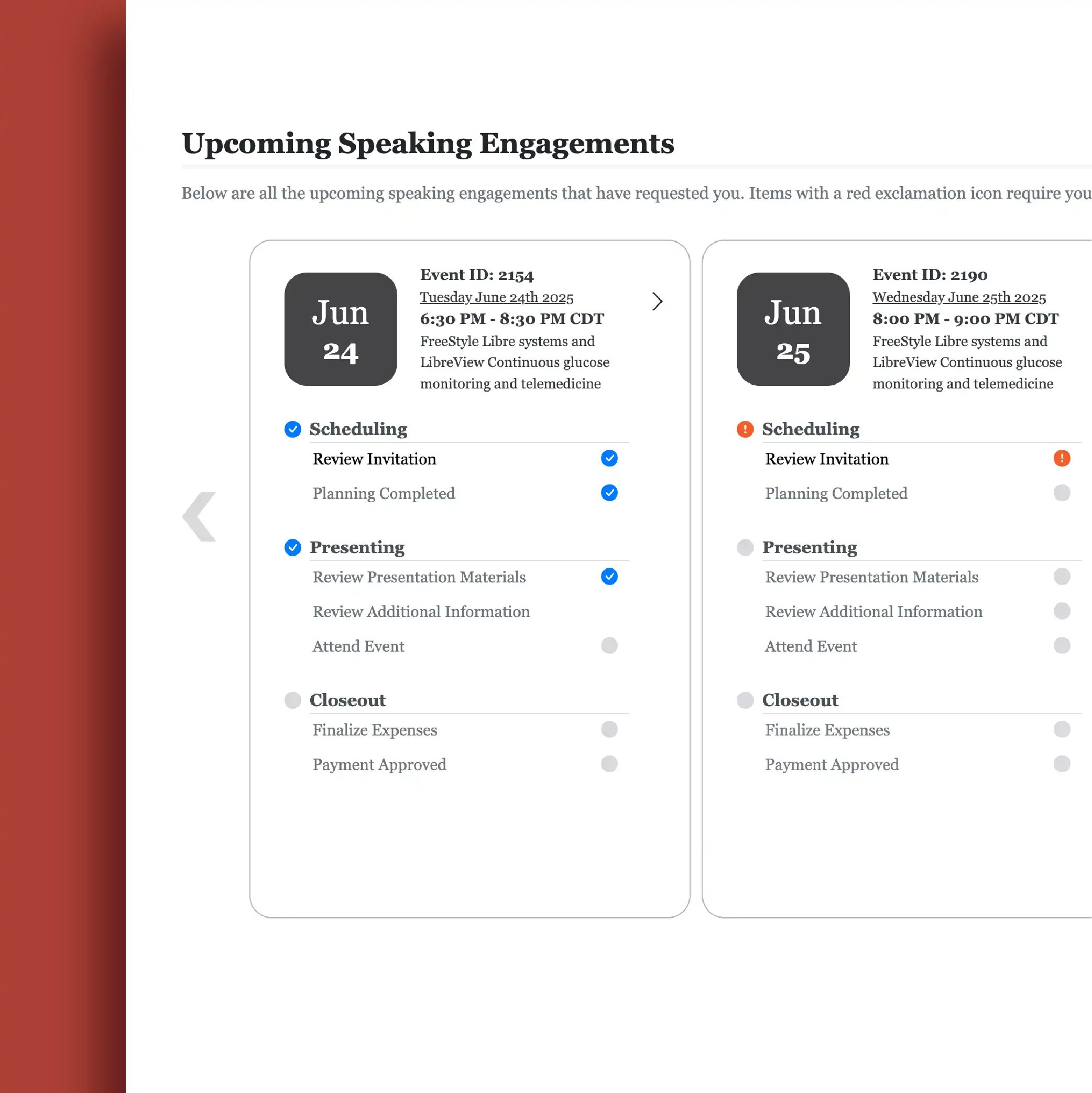
After a program concludes, the speaker receives an automated confirmation email, and the close-out process captures everything—from attendance validation to expense reconciliation—with a full audit trail.
This isn’t just a convenience feature. It’s a compliance feature. When speakers can self-confirm attendance, upload receipts and track their own honoraria against contractual caps, you’ve eliminated an entire category of manual follow-up that eats project managers’ time and introduces human error into your most sensitive financial data.
We also automate attendee communications through PRC-approved email templates: invitations, hybrid confirmations (with directions for in-person or a link to join the webinar), thank-you emails with one-click evaluation links and follow-up reminders. Attendees get a QR code in their thank-you email to book time directly with the sales representative who hosted the event—and many of our clients’ reps report strong results from this feature.
7. Choose a Technology Partner, Not Just a Technology Vendor
This is the one that matters most, and it’s the one most teams get wrong.
A vendor gives you software and a help desk. A partner sits at the table with you when you’re pitching a new client. A partner notices the questions your team keeps asking and proactively builds how-to guides for them. A partner co-creates solutions that help you win new business—not just execute the business you already have.
That’s the kind of relationship we’ve built with our agency partners. When Citrus Health Group was presenting to a major pharmaceutical company and faced skepticism about whether their technology could handle the scale, we joined the pitch as technology partners—not just vendors.
Having us at the table provided the confidence needed to move forward with what became a significant multi-year engagement.
Nikki Walker at Citrus captured the dynamic well: the collaboration is key. They don’t see ExtendMed as just the logistical partner, and we don’t see them that way either. We see each other as strategic partners.
The same principle holds for our work with Imbue Partners. When Gretchen Hover needed to capture patient experience data for an FDA submission on a rare, terminal disease, she chose Health Expert Connect over alternative platforms because our model made sophisticated research methodology accessible to her smaller biotech client.
As Gretchen noted, larger enterprise platforms were simply cost-prohibitive for scrappier companies moving treatments from Phase II into Phase III. Our flexible, project-based approach meant her client could conduct the same caliber of research as big pharma—without the big pharma price tag.
That’s really the difference between a vendor relationship and a partnership. We’re not just providing a platform. We’re actively thinking alongside our clients about how to demonstrate value, how to be more efficient and how to win new business.

A Note for the Agencies Out There: You Don’t Have to Build This Yourself!
We're seeing more medical communications agencies and boutique consulting firms realize they need proper speaker bureau technology—but they don’t need to build it from scratch and they shouldn’t have to lock into a rigid enterprise contract to get it.
We designed Health Expert Connect to be licensed and white-labeled for agencies that want to run their clients’ speaker programs on a best-in-class platform while keeping their own brand front and center. That means a turnkey solution for speaker program logistics, full training and onboarding for your internal team, optional strategic consulting, a white-labeled environment aligned with your SOPs and on-demand access to new feature rollouts.
ExtendMed's platform, Health Expert Connect, allows you to easily manage all the steps necessary for hosting a successful speaker program. Today, we will walk you through how we can support your events from multiple user perspectives, a representative, speaker, project manager, and attendee. Before we get started, I want to show you how the system is set up. Just a quick overview. From a setup perspective, we can brand the platform with your company's logo, program information, and branding for your product. We can set styles in terms of colors, add to the footer with your privacy policy copyright information, et cetera. Now let's go ahead and start as a representative. You can see I'm logged in here as Representative Carol Bailey, and I'd like to go ahead and add a new event. I have the ability to name my event. I'll just name this test event. 65, and it's going to be in Baton Rouge, where I live, and this is my territory. I'm going to choose from a topic. This topic corresponds to a slide deck, and I'm going to go ahead and make this event, schedule this event for a couple weeks out on February 20th, I'm going to start the event at 6 p. m. And I know that Tuesdays are a good day for my target HCPs, and I'm going to end the event two hours later at 8 p. m. So from here I'm going to make this event an onsite events. I'd like to have the speaker. Join us at a restaurant I'm estimating that there will be 8 attendees and I'd like to do this at men's tours on the boulevard in Baton Rouge. So all the address information is already stored and I can move on in this process. My next step is going to be to select a speaker. Here on this page, I can see the speakers who are eligible to speak on this particular deck, and I can go ahead and select from these options. Speaker Elizabeth Heiden is very close from a travel perspective. She is only two miles away from my restaurant venue. And in addition, she has high ratings. So I'm going to go ahead and choose Dr. Heiden for my speaking event. What I'd now like to do is to log in as a project manager just to give you an overview of the approval process. So while the representatives are able to, as we just demonstrated request a new event, request a speaker, request a venue select whether they're conducting a webcast event or an on site event, etc. The project managers are getting notified so that they can go through the approval process for all the events that are requested. So going back into the system now as a project manager, you can see in the top right corner here, I'm going to go ahead on my management tab and look at all the events that are needing approvals as this page comes up, you'll see that there are some events that that are already live. There are some events that are overdue, etc. So I can track the status of my events. I'd like to go in and show you what an event looks like. What approvals are needed for each event. So let's go through this particular event, which is coming up on February 6th and see what the approval status is. It looks like all the planning has been done, and this event has already moved to live status so that the representative can start recruiting. The speaker has confirmed availability and gotten an email to do so. We have turned on accounting, we have added any planning expenses, and so that you can see the venue details we can go to the specific venue information, and if I have any updates I need to make, I could add them here. There is an email associated with the event planner at the restaurant. The, name of the restaurant contact is stored, the phone number, etc. If I want to add any AV requirements, I can do so here. So all the venue details are already stored here, and I have that carried over because I've planned events previously at Mansurs. In terms of speaker, I can see that the speaker has also been approved. So, this event gives you an example. It is now ready for the representative to start recruiting. Going to go back in now as a representative, go to my test event 63 and start to invite some of my target HCPs to this event. So, here is event 63 to go to my event details. Go to my management page, and I can see that 5 people have been invited to date. 3 have registered and since the event hasn't occurred yet, no one has attended. If I want to go into this event and see all the people in my territory, I can see I have 109 targets in my territory, and I can show all those targets at once. But that's a lot of people to go through, so I think I want to filter this list a little more thoughtfully. I'm going to select all the people, and I've already done this, all the people who are a certain distance from the, the venue. So. If I want to start out, I'll uncheck this for a moment and we can check miles from from where they, their personal address is. So let's go ahead. We, we will wait for this to come up. I have this set currently to 25 miles radius from the, from the restaurant venue. And here we have a listing of people who are this distance, 25 miles or less from the venue. You can see that I can then also search by last name, sort this by last name and go through here. Let's go ahead and sort. By last name with this list and now we can go ahead and start to invite people. If I talk to for example Dr. Kuhlman and Dr. Kuhlman says, yes, I'd like to register, then great. I can click register. If I want to invite Dr. Littel and send an email invitation, I can click invite and Dr. Littel will receive an email invitation. Now I also have the option to print invitations and I can do that at the top of my page. So here is an invitation printout that includes a QR code so that the doctors can easily scan the QR code and register for the event. All of that takes place on my event management page and I have the ability to recruit from my list target list of 191 HCPs. I'd now like to go to this event as a speaker. So you can see that I'm logged in here as Dr. Heiden. I'm going to go under my activities and events. Again, I'm looking for event 63, so here is my event 63. And I have the ability on this page to be able to mark myself as being interested in attending, first of all. And then I also have the ability to download any slide decks that are associated with this event. So there are my slide decks. Just to give you an example of other materials that can be shared here. We can look at a, an older event from. Earlier in the year and see other details that are stored. For example, I believe this event from October 19th. I can see my audience is going to be community endocrinologists. I can download the deck and since this event has already ended, I can submit expenses. Typically expenses are only eligible to be submitted within a window of several days, so whether your policy is 72 hours or 5 business days, et cetera, we can build that into the system and send reminders to the speakers so that they submit their expenses on time, including receipts. I'd now like to show you what what this looks like to be able to register for an event from a healthcare provider's perspective. So let's go ahead and look at one of these events. This is an event coming up. I'm going to go in just for a moment here as the project manager to copy the link. That is associated with that QR code, and we are going to enter it just to see what this looks like from a health care providers perspective. So, they come to this page, there can be details about the event, maybe an image associated with the event, and then they can register entering all their information. Again, this page can be branded. This can be templatized so that every event has a specific slide deck and certain speakers can be included here. Here we link to the speaker bio and so there's other information available for the event. I'd now like to just mention that we also allow after the event in closeout, we can go to a specific event as a project manager. And when an event is ready for close out, let's choose an event that has happened in the past. We'll go to this particular event, 1470. And when in the closeout process, a thank you note goes out to all attendees. For having attended the event in addition, they have the opportunity via a QR code to schedule a follow up meeting with the sales representative. So what that looks like from a user scheduling perspective, we'll go into my user scheduler, just so you can see .They would get a link if they were scheduling a meeting with me to have an introductory meeting and that link shows my calendars real time availability so they can schedule a meeting directly with the sales representative at their convenience. This is a really nice feature and many of our sales representatives report positive results from this. So in that thank you note, they have a QR code to book time with the sales representative. They can complete an evaluation and they get a reminder to complete the evaluation if they have not done so within a two day period. Going back to close out, we'll go to a specific event to close out here. Again, let's go to this particular event. We can go through the approval steps. The event has already happened. So we need to confirm that the speaker spoke at this event. And the speaker gets an email, an automated email, once the event's time has expired. In other words, we've gone past the scheduled event time they get a notice saying, please confirm that you spoke at the event. In this case, I'm going to as the project manager, complete those details on behalf of the speaker. And there's an audit trail that I have done so, so here I'm taken to the event page and I can go to management and I can mark the appropriate people as having attended. So the speaker is Heiden. I'm going to go ahead and select Heiden here. And mark Speaker Heiden as having attended so she has attended the event. We need to enter the time. It was a 60 minute meeting. And so those details are stored and I can go back through the approval process. So I can now confirm the speaker. I can confirm the 7 attendees again with an audit trail, and if there are any speaker expenses, I can go to accounting and make sure to include those details. So we do have an honoraria here for Speaker Heiden because she's contracted for $500 for a local event. There is also a $250 expense associated with the private room rental and then a $1,000 group expense for food and beverage. So all of that is captured here. The total event cost with these expenses is $1,750 and that does get generated on a Sunshine report. Hopefully this gives you a quick overview of our system. If you do have any further questions, we would be glad to address them in a live demonstration. But this video gives you an overview of our system and how you could use it to support your speaker programs.
We support agencies with full back-end management, co-branded portals, white-labeled logins and shared dashboards. Your client remains front and center while we handle the technology and compliance infrastructure.
This is a huge and growing part of our business. We’re working with agencies that manage speaker bureaus for some of the largest pharmaceutical companies in the world, and they chose us because they needed a system to manage these programs well at scale—not just another piece of software to maintain.
The economics make sense, too. You can start with a short-term pilot for a single brand or region, prove ROI with full tracking and reporting and scale from there. No long-term commitment required upfront.
Request a demo to see how Health Expert Connect™ can help you test smarter and launch with confidence.
Ready to Run Speaker Programs the Right Way?
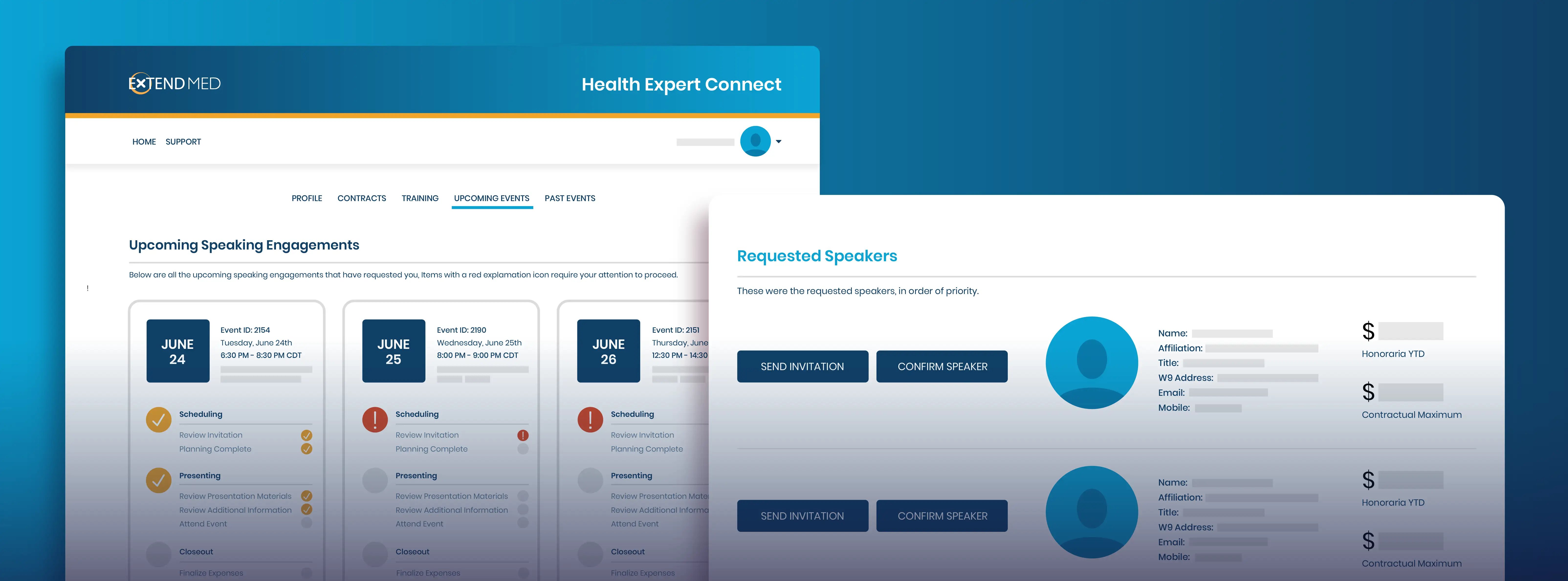
Health Expert Connect™ is the single platform built to power every dimension of modern speaker bureau management—live, virtual and hybrid.
-
For pharma and biotech teams: Run the full speaker program lifecycle in one system. Field reps request events through guided, compliant workflows. Business rules and FMV rates enforce themselves automatically. Real-time dashboards give you spend visibility, engagement analytics and Sunshine-ready reporting without the manual lift. Your speakers get a self-service hub for contracts, training, upcoming events and expense submission. Your compliance team gets automated audit trails they can actually defend.
-
For agencies and med comms firms: License and white-label Health Expert Connect to run your clients’ speaker programs on a best-in-class platform—with your branding, your SOPs and your team in the driver’s seat. We provide the technology, training and strategic consulting. You keep the client relationship front and center. One of our agency partners went from a patchwork of rigid tools to managing 700+ programs annually on our platform in under a year.
Start small, prove it fast. Every engagement begins with a pilot—a single brand, a single region, a single quarter. No long-term contract required. Full tracking and reporting from day one so you can see the ROI before you scale. We handle onboarding, training and execution support. You’re never on your own.
📄 Free White Paper
The Patient Centricity Playbook
Seven strategies pharmaceutical commercial teams are using to better engage patients—and how to deploy them yourself