

In case your time is short:
- Untested messaging wastes budget and delays adoption. Getting HCP feedback before launch prevents expensive missteps and accelerates field performance.
- Visual aids fail when they don't reflect how HCPs actually process information. Testing materials with target prescribers can reveal points of confusion before sales teams encounter them.
- One round of feedback isn't enough. Messages need validation through multiple touchpoints—from pre-launch testing through post-launch optimization.
- Virtual engagements capture the "why" behind HCP reactions through structured discussion.
- Asynchronous testing scales beyond geographic constraints. Virtual platforms enable faster iteration cycles without the logistics burden of traditional focus groups.
- Real engagement data shows what resonates. ExtendMed’s platform captures which materials HCPs engage with, highlights discussion themes, and surfaces where messaging may be unclear or ineffective.
Your team invests months developing launch materials—crafting key messages, designing visual aids, building patient education resources—only to discover in the field that core messages don't resonate, visual logic confuses rather than clarifies, and HCPs dismiss content as irrelevant to their practice.
This is what every commercial team fears as they conduct market research before launching a new product.
And the consequences of mistakes like these extend far beyond wasted design hours:
- Sales representatives may struggle to gain traction with materials that miss the mark.
- MSLs may field objections that pre-launch testing should have surfaced.
- Brand teams might need to authorize expensive reprints when fundamental messaging disconnects become apparent.
- And most critically, adoption could delay while teams scramble to course-correct.
Let’s dig into why this can happen, and how to prevent it.
Where Traditional Message Testing Breaks Down
Most pharma teams rely on fragmented approaches to validate their messaging.
Internal stakeholder reviews ensure medical accuracy but can't predict field reception. Agency partners polish creative execution but lack direct access to target prescribers. And by the time sales teams or MSLs gather enough anecdotal feedback to identify patterns, months have passed and significant budget has been committed.
The pattern we consistently see:
Too often, teams develop materials through internal consensus, make assumptions, then launch only to discover that field teams can't gain traction. Without systematic pre-launch testing, critical disconnects only surface after it's too late for efficient correction.
Traditional market research methods tend to amplify the weaknesses of this approach:
- One-off focus groups create artificial environments that don't reflect how HCPs actually make clinical decisions or process information during real conversations.
- Survey-only approaches capture surface reactions—whether HCPs "like" a message or visual—but miss the deeper insights about why something resonates or creates resistance.
- Geographic constraints limit traditional testing to major metropolitan areas, missing the practice variation and regional perspectives that influence real-world adoption.
- Timing gaps between testing and implementation allow market dynamics to shift, making insights stale before they can inform final materials.
These fragmented approaches lack the infrastructure for iterative refinement. Teams get one chance to test, then must commit to production without the ability to validate whether revisions actually improved effectiveness.
How Leading Teams Test Messaging Systematically
How, then, can pharmaceutical companies overcome the weak points of traditional approaches?
Our suggestion: treating message testing as an ongoing process rather than a discrete event, leveraging technology to gather structured HCP feedback throughout the product lifecycle.
Using Virtual Advisory Boards for Message Validation
Commercial teams don’t have to rely on infrequent in-person meetings with HCPs to perform market research anymore.
Rather than relying solely on internal reviews and agency input, teams can test interactive visual aids with HCPs before releasing them to the field using virtual engagement tools such as video conferencing and discussion boards.
And because these engagements are virtual, they aren’t as constrained by geography or the expense and administrative logistics of coordinating in-person meetings. This often means a more diverse segment of the target audience(s) can participate, and cost-effectively.
Through asynchronous discussions and targeted surveys, it’s possible to collect structured feedback on whether messages are clear and whether the materials address what actually matters to the target audience.
This allows for visual aids to be edited based on real HCP input—before a single sales representative walks into an office.
For example:
One company used ExtendMed's Health Expert Connect™ platform to conduct message testing as they prepared to expand into the nephrology market.
They needed answers to specific questions: Is our message clear for nephrologists? Are these interactive visual aids that sales representatives will share actually addressing what matters to this specialty?
Rather than conducting traditional focus groups, they used asynchronous discussions and surveys to collect feedback from nephrologists on their own schedules. This approach enabled them to share visual aids in advance and gather structured reactions before releasing materials to the field.
The company made changes to their interactive visual aids for two consecutive years based on feedback gathered through this ongoing engagement. This wasn't a one-time validation exercise—it was a systematic process of testing, refining, and re-testing that continued throughout the product lifecycle.
Testing Patient Education Materials
Another powerful application for virtual tools involves testing patient education materials before distribution.
For example:
One pharmaceutical team started by asking patients about their experiences, then developed educational pamphlets incorporating patient language and concerns. But they didn't stop there.
They brought those draft materials back to patients and asked: Have we hit the mark? They even presented two or three design variations to test which cover would make patients want to open the pamphlet and read further. Which version rings most true to your experience? Which one pulls you most? Which makes you want to read on?
This iterative approach accomplished multiple objectives simultaneously. It demonstrated to patients that the company heard them by incorporating their words directly into materials. It validated which messaging and visual approaches would perform best. And it created materials that genuinely resonated with the intended audience because they were co-created with them.
The Power of Direct HCP Feedback
Every commercial team knows nothing is more effective than hearing directly from HCPs about what resonates and what creates barriers.
Through recorded discussion sessions, commercial teams can capture not just what HCPs say, but how they say it—the language they use, the concerns they raise unprompted, the questions that surface naturally.
A 30-second video clip of an HCP describing a clinical challenge in their own voice can be extraordinarily motivating for internal teams. It brings the target audience to life in ways that survey data or written reports never can. These insights can push teams to refine messaging quickly and help ensure that materials address real clinical needs rather than assumed ones.
Choosing a Market Testing Platform
The systematic approach outlined above requires technology that enables rapid iteration, captures authentic feedback, and stores insights where they are easy to find and compare.
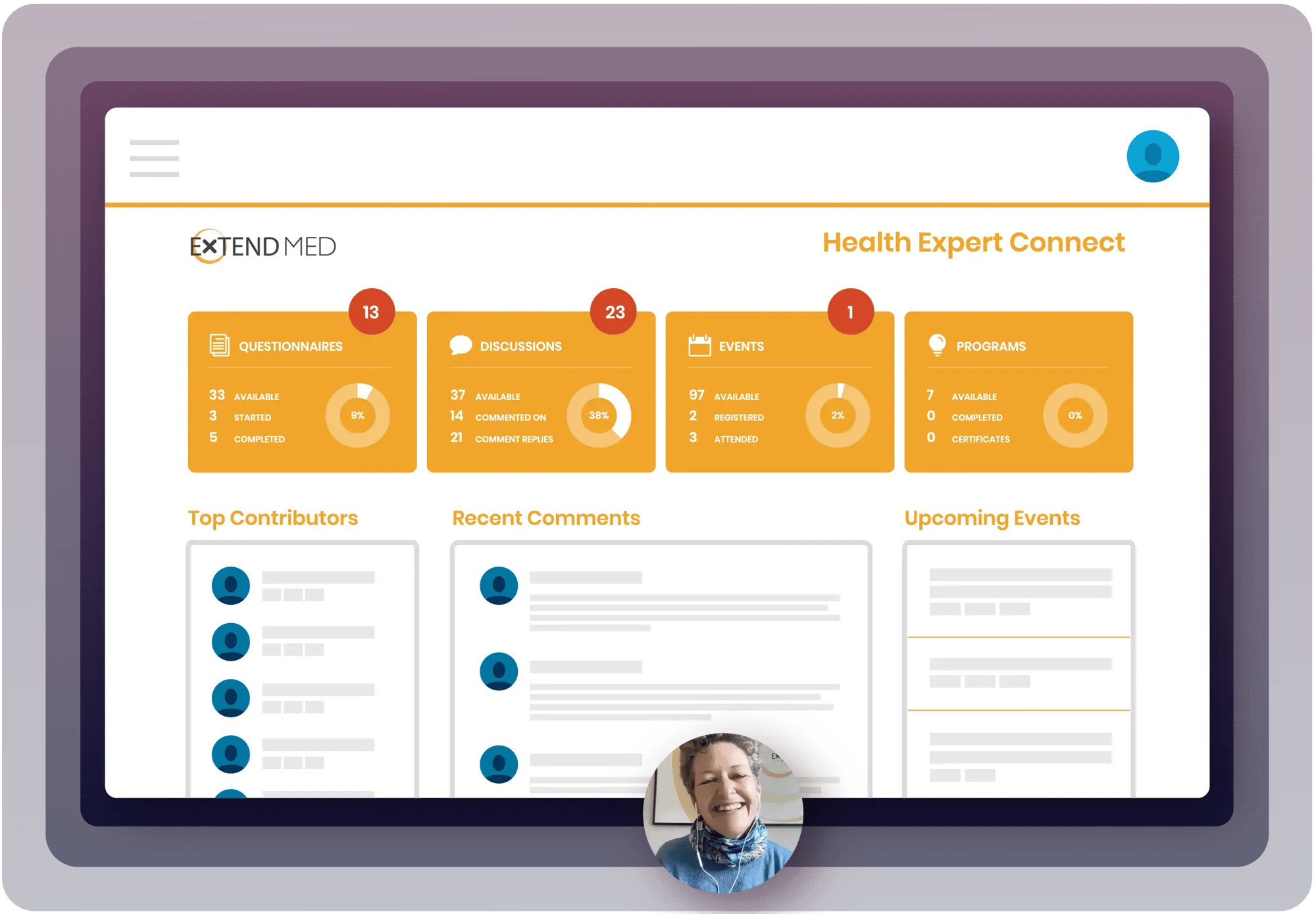
ExtendMed's Health Expert Connect™ platform was designed to support exactly this type of structured HCP engagement:
- Asynchronous discussion boards enable HCPs to review materials and provide thoughtful feedback on their own schedule, eliminating the artificial time pressures of traditional focus group settings.
- Survey tools gather quantitative reactions to messaging variations, testing which value propositions resonate most strongly and which create confusion.
- Virtual meeting capabilities facilitate live discussions where HCPs can react to materials in real-time, with moderators probing on the "why" behind their responses.
- Secure resource centers allow teams to share draft materials, multiple design variations, and supporting content that HCPs can review at their convenience.
- Engagement analytics track which materials HCPs spend time with, which sections they skip, and how participation patterns reveal relative interest across messaging approaches.
- Recording and transcription capture every discussion for detailed analysis, allowing teams to identify common language patterns, recurring objections, and unexpected insights that might be missed in live note-taking.
Best Practices for Gathering Structured HCP Feedback
Based on ExtendMed's work with pharmaceutical clients conducting market research and message validation:
- Create ongoing dialogue, not one-way testing. The most valuable insights come from facilitated discussions where HCPs can react to materials, hear peer perspectives, and build on each other's observations. Asynchronous discussion boards enable this type of exchange without requiring everyone to be available simultaneously.
- Test in clinical context. Share materials the way HCPs will actually encounter them—not as isolated design elements, but as complete tools they'd use in practice. This surfaces practical barriers that may not be apparent in abstract review.
- Probe beyond surface reactions. Move past "do you like this" to understand "how would you use this" and "what questions does this raise." The most actionable feedback explains not just what doesn't work, but why it creates barriers.
- Engage diverse HCP segments. Include both early adopters and mainstream practitioners, academic and community-based physicians, high-volume prescribers and those less familiar with the therapeutic area. Different perspectives reveal different messaging needs.
- Close the loop. Show HCPs how their feedback influenced final materials. This builds trust for ongoing engagement and demonstrates that their participation creates tangible impact.
Platform Requirements for Effective Message Testing
Traditional testing approaches struggle with fragmented tools—email chains for distributing materials, spreadsheets for tracking feedback, separate platforms for surveys and discussions and manual processes for analyzing results. This fragmentation creates administrative burden precisely when teams need simplicity.
An effective message testing platform should provide:
- Centralized material sharing so HCPs access everything in one location rather than hunting through emails.
- Both synchronous and asynchronous engagement options to accommodate varying HCP schedules and enable deeper, more thoughtful feedback.
Integrated survey and discussion tools that capture both quantitative reactions and qualitative insights without switching systems. - Engagement analytics showing which HCPs participated, what materials they reviewed, and how extensively they engaged.
- Secure, compliant environment maintaining required documentation, audit trails, and adherence to data privacy standards appropriate for pharmaceutical engagements.
- Easy iterative workflows enabling test-revise-retest cycles without rebuilding infrastructure each time.
ExtendMed's Health Expert Connect™ platform consolidates these capabilities in a single, branded environment where commercial teams can conduct systematic message testing throughout the product lifecycle.
Signs You Need Better Message Testing
If any of these sound familiar, your message testing approach likely needs strengthening:
- Your field teams report that launch materials don't resonate in actual HCP conversations.
- You discover major messaging disconnects months after materials are in the field.
- HCPs consistently raise objections you didn't anticipate during development.
- Visual aids require expensive reprints shortly after production due to confusion or errors.
- Sales training surfaces uncertainty about how to use materials effectively.
- MSLs report that messaging doesn't reflect how HCPs actually discuss the therapy.
- Your testing relies entirely on internal stakeholder reviews and agency feedback.
- You lack systematic input from actual target prescribers during development.
- Material revisions happen reactively based on anecdotal field reports.
- You can't measure which specific messages drive impact vs. create barriers.
- Different geographic or specialty segments respond unpredictably to your messaging.
Next Steps
Message testing isn't optional infrastructure for launch success—it's essential for ensuring commercial investments deliver returns. The cost of structured testing is a fraction of the cost of failed messaging in the field.
ExtendMed's Health Expert Connect™ platform enables pharmaceutical commercial teams to gather authentic HCP feedback throughout the product lifecycle through virtual advisory boards, asynchronous discussions, and integrated survey tools.
Request a demo to see how Health Expert Connect™ can help you test smarter and launch with confidence.